René Buthaud, a pivotal figure in French pottery, exemplifies the remarkable synthesis of traditional craftsmanship and avant-garde aesthetics in the early 20th century. Born in 1886, Buthaud’s artistic journey began in the realm of silver decoration before he ventured into the broader artistic landscapes of Paris, where he refined his skills and expanded his creative horizons. Beyond the ceramics for which he is renowned, Buthaud’s oeuvre includes graphics, watercolors, and even stained-glass window designs, showcasing his versatility and wide-ranging talents.
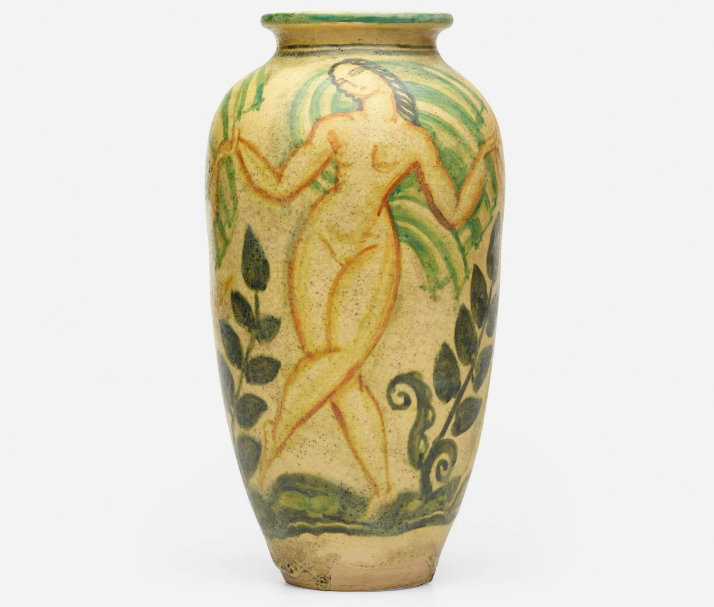
The essence of Buthaud’s pottery lies in its distinctive depiction of idealized female forms, encased in firm brown outlines, a motif that resonates across his artistic output, including his poster designs. This stylistic hallmark not only defines Buthaud’s aesthetic but also aligns with the broader movements of his time, reflecting the influences of contemporaries such as Jean Dupas and Eugène Robert Pougheon. Moreover, his work often features Neo-classical imagery, bridging the gap between classical art and modernist interpretations.
Buthaud’s foray into ceramics was catalyzed by the aftermath of the First World War, marking a new chapter in his artistic endeavors. His debut in the ceramic arts was highlighted by an exhibition in 1920, where his vases, characterized by their simplicity and elegance, were first introduced to the public. These pieces, whether adorned with hand-painted figural decorations, crackle-glazed, or sgrafitto, stand out for their understated forms and the use of stone or cream backgrounds, often accentuated by painted rims. The figural decorations, reminiscent of those found on his painted wares, are particularly notable for their brown or green outlines, lending a unique visual coherence to his body of work.
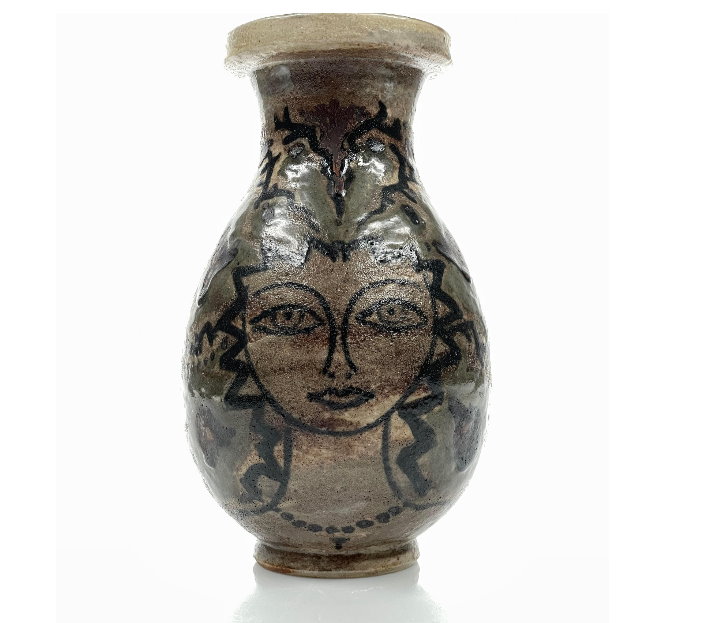
A pioneering aspect of Buthaud’s legacy is his integration of African motifs into his art, an innovation inspired by the Revue Nègre’s performances in Paris. This element of his work underscores a cultural openness and a willingness to explore and incorporate diverse artistic influences, setting Buthaud apart from his contemporaries.
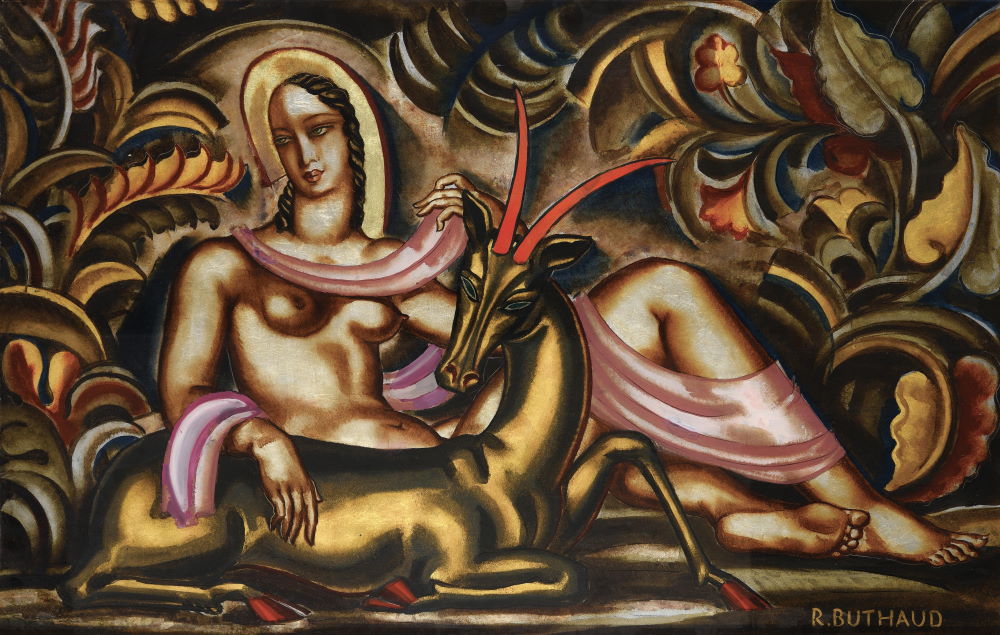
Among his contributions to the field of ceramics are his crackle-glazed and sgrafitto earthenware vases, which bear the distinct marks of his craftsmanship, either through the painted “R. Buthaud” signature or the “RB” monogram. These vases often feature quasi-mythical figures, such as mermaids and fauns, or are adorned with pastoral scenes and landscapes, offering a glimpse into Buthaud’s richly imaginative world.
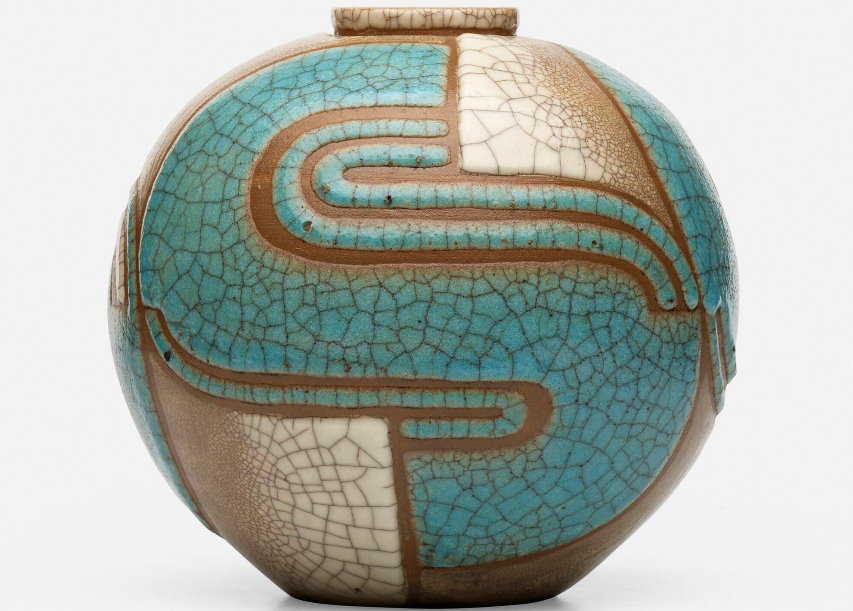
René Buthaud’s legacy in French pottery is marked by his innovative approach to form and decoration, his exploration of cross-cultural motifs, and his commitment to blending artistic disciplines. The market for his work is strong in New York and Paris, but less so in the UK which is evident from the number of pieces appearing at auction. Through his work, Buthaud not only contributed to the evolution of French ceramics but also left an indelible mark on the broader artistic landscape of the 20th century.
Related
The Timeless Elegance of Boch Frères Art Deco Pottery