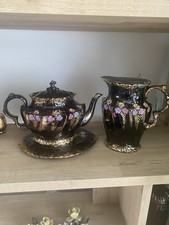
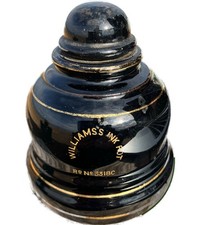
Jackfield Ware is a striking form of black-glazed earthenware pottery that originated in the mid-18th century in Jackfield, Shropshire. While once thought to imitate Wedgwood’s basalt ware, Jackfield actually predates it and played a key role in the experimental development of black-glazed pottery in Britain. Characterised by its lustrous glaze, red or buff-coloured body, and occasional decorative gilding, Jackfield Ware remains highly collectible and historically significant. We take a look at this unique pottery along with a price guide of realised prices of some examples at auction.
Related Collectibles on eBay
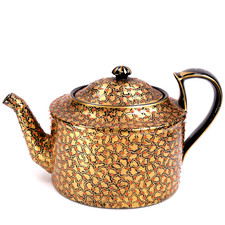 Jackfield Jewelled Pottery Teapot Jet Ware Circa 1870 Pattern 6597 h13.5cm L22cm
£495.00
Jackfield Jewelled Pottery Teapot Jet Ware Circa 1870 Pattern 6597 h13.5cm L22cm
£495.00
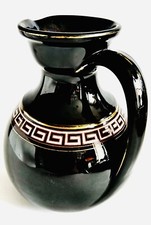 Antique (1870s) Victorian Handcrafted Glazed Jackfield Pottery Jug (7”, 800g)
£375.00
Antique (1870s) Victorian Handcrafted Glazed Jackfield Pottery Jug (7”, 800g)
£375.00
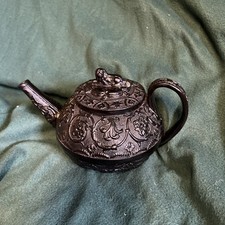 Antique Victorian Jet Ware Teapot Wedgwood Jackfield style Spaniel Dog Finial
£292.64
Antique Victorian Jet Ware Teapot Wedgwood Jackfield style Spaniel Dog Finial
£292.64
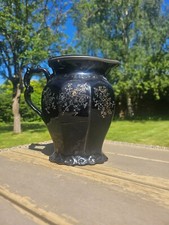 Jackfield Ware Black Pewter, Enamel Floral, 18th-19th Century - Good Condition
£312.70
Jackfield Ware Black Pewter, Enamel Floral, 18th-19th Century - Good Condition
£312.70
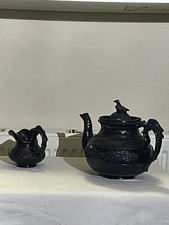 RARE Antique Victorian Jackfield Ware Teapot & Creamer Set - Intact Bird Finials
£234.70
RARE Antique Victorian Jackfield Ware Teapot & Creamer Set - Intact Bird Finials
£234.70
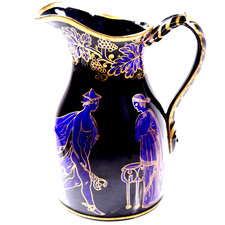 Hermes Greek Jug Alcock Jackfield Jet Ware Embossed Azure Blue h22cm Circa 1840
£240.00
Hermes Greek Jug Alcock Jackfield Jet Ware Embossed Azure Blue h22cm Circa 1840
£240.00
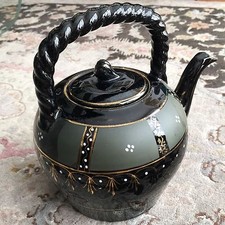 Rare Antique Early Victorian Jackfield Pottery “Black Ware” Teapot (9”/23cm)
£175.00
Rare Antique Early Victorian Jackfield Pottery “Black Ware” Teapot (9”/23cm)
£175.00
 Rare Antique Victorian (1850s) Jackfield Pottery “Black Ware” Ceramic Teapot
£175.00
Rare Antique Victorian (1850s) Jackfield Pottery “Black Ware” Ceramic Teapot
£175.00
 Miniature Staffordshire Pottery Jackfield Ware Hen on Nest Egg Holder SMALL
£165.00
Miniature Staffordshire Pottery Jackfield Ware Hen on Nest Egg Holder SMALL
£165.00
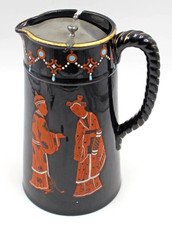 Antique English Pottery Pitcher c1875 Chinoiserie Black Ware Jackfield Pratt
£54.03
Antique English Pottery Pitcher c1875 Chinoiserie Black Ware Jackfield Pratt
£54.03
 Aesthetic movement enamel decorative motifs vase Jet Ware Jackfield pottery
£65.00
Aesthetic movement enamel decorative motifs vase Jet Ware Jackfield pottery
£65.00
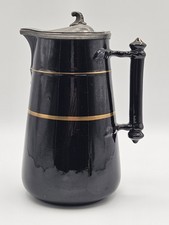 Victorian Jackfield Jet Ware Ceramic Syrup Pitcher Pewter Lid Gilded - VGC
£44.98
Victorian Jackfield Jet Ware Ceramic Syrup Pitcher Pewter Lid Gilded - VGC
£44.98
eBay listings may contain affiliate links. We may earn a commission from qualifying purchases.
The Origins of Jackfield Ware
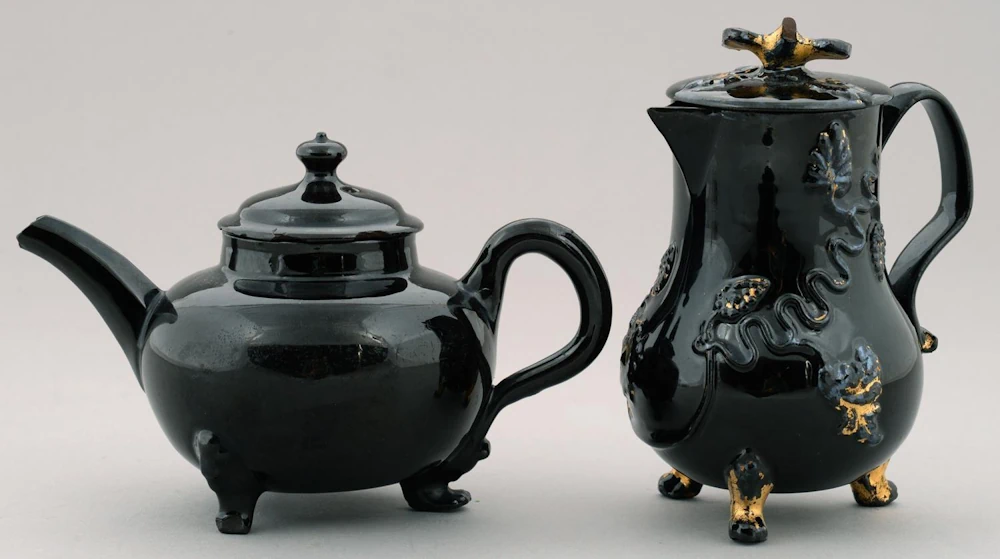
Production of Jackfield Ware began around 1751 at Jackfield, where local clays and nearby coal mines provided ideal resources for ceramic innovation. Early pieces were influenced by Elers red stoneware and related to other contemporary wares, such as Whieldon’s high-fired red-bodied ceramics and Wedgwood’s green glazes. The glaze itself was achieved by firing cobalt at high temperatures until it turned deep blue-black, then allowing carbon-filled smoke from the kiln to enrich its sheen.
Materials and Glazing Techniques
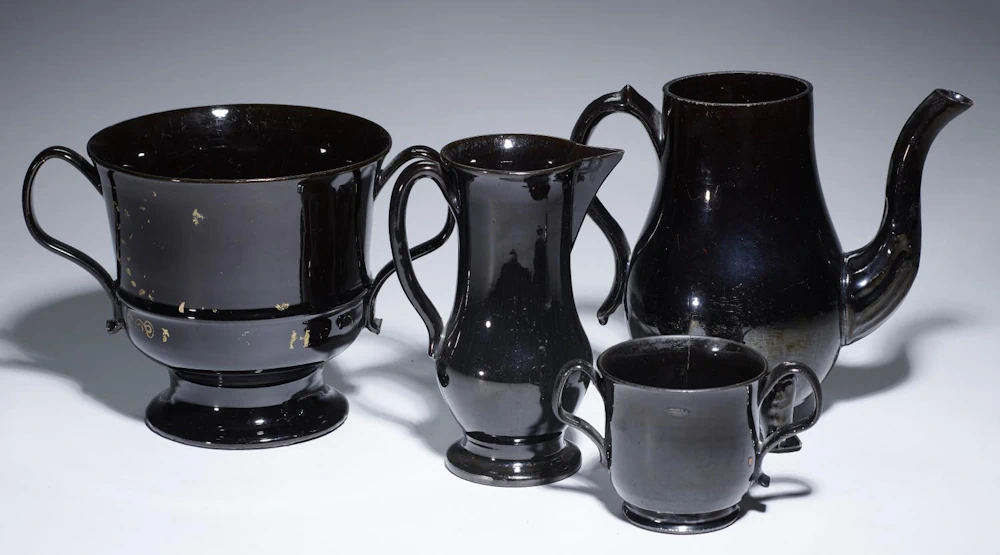
Jackfield Ware is made from a brownish-red earthenware body, sometimes with stoneware-like density. Some bodies contained clay from coal mines, rich in coal dust, resulting in a heavy and highly polishable ceramic. The lustrous black glaze was created either with cobalt oxide or manganese-stained lead glazes. A later variation, known as Rockingham glaze, emerged in the 1790s and featured a deep purplish-brown bloom. Rockingham pieces often have moulded decoration and flatter globular shapes more typical of the late 18th century.
Decorative Styles and Common Forms
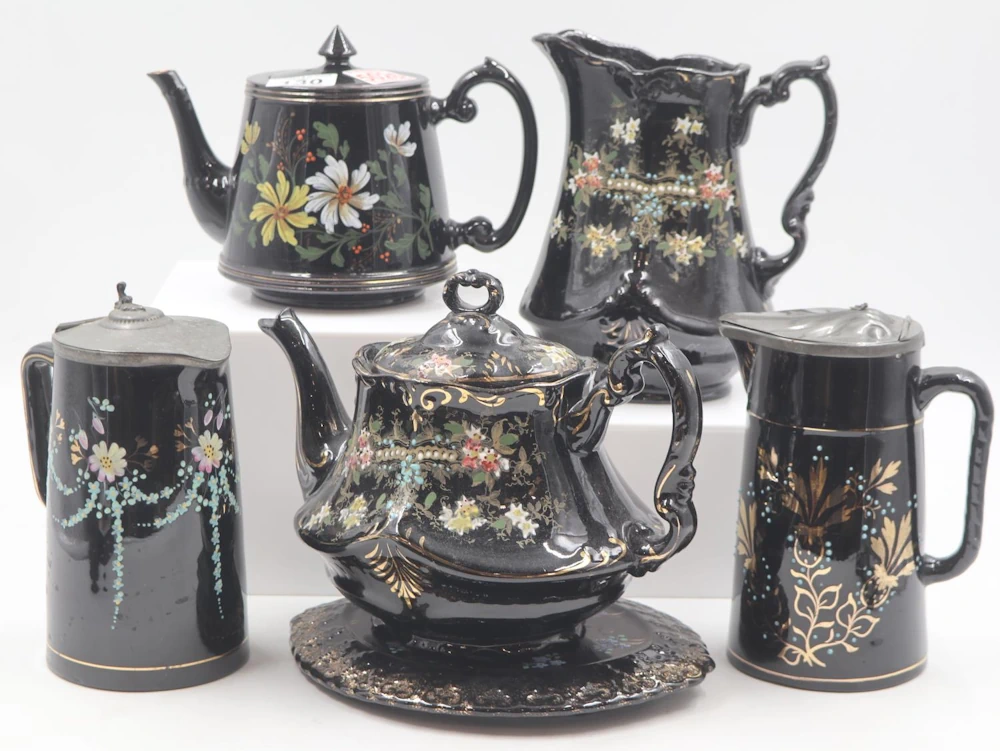
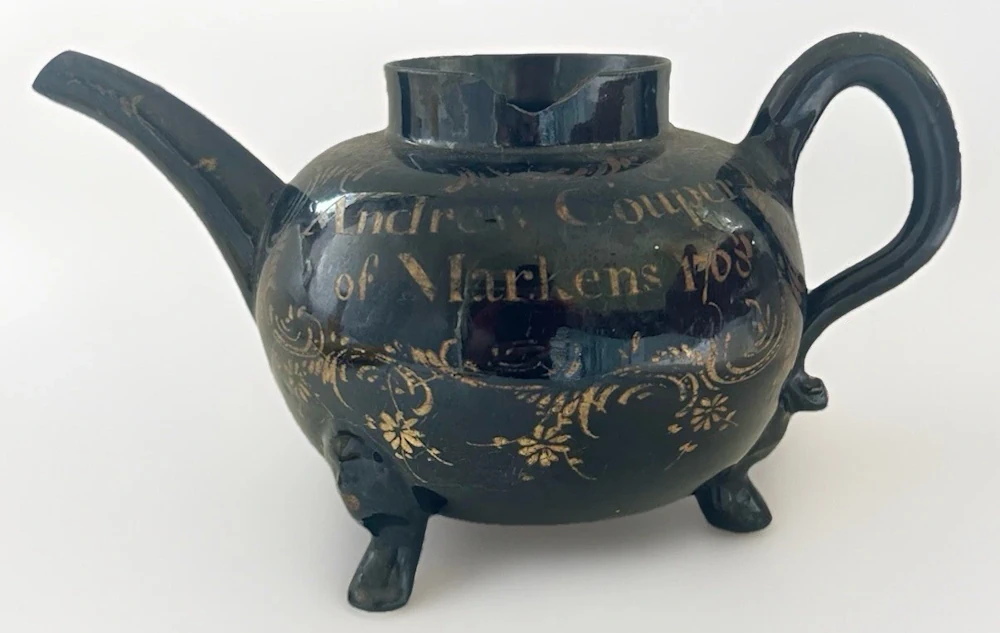
Many Jackfield pieces were decorated after firing using cold enamels or oil-based gilding. These were fragile and are now often found only in traces. Early Jackfield teapots and jugs were usually small (often under 5 inches), raised on three stubby feet, and had rounded handles with low-set spouts. Jugs featured pointed lips and simple pear shapes. Teapot finials were sometimes shaped like birds, adding to their charm. Later pieces, particularly those with Rockingham glaze, featured low-relief moulded bands and religious inscriptions influenced by John Wesley’s teachings.
Identifying Authentic Jackfield Ware
- Rich, glossy black glaze that may show shrinkage near the base
- Reddish earthenware body; yellowish buff or pale red denotes later production
- Occasional marbling resembling coarse agate
- Unglazed or clear-glazed bases are common
- Decorated in oil gilding or cold enamels—often faded or partially worn
- Three-footed forms typical of earlier Jackfield Ware
- Later Rockingham pieces have a purplish glaze and more elaborate shapes
Collecting Jackfield and Rockingham Ware
Collectors value Jackfield Ware for its distinctive black sheen and historic importance. Small teapots, inscribed jugs, and oil-gilded wares are particularly desirable. The contrast between early Jackfield and later Rockingham pieces adds depth to a collection. Museums such as the Fitzwilliam Museum hold fine examples, including a painted baluster jug from 1770, standing just over 7 inches tall.
Whether as a display piece or part of a focused ceramic collection, Jackfield Ware continues to captivate enthusiasts with its rich glaze, early industrial charm, and ties to Shropshire’s pottery heritage.
Related
Thomas Whieldon and his Tortoiseshell Wares and Tortoiseshell Pottery
Related Collectibles on eBay
 Jackfield Ware style teapot hand pained forget me nots with decorators number .
£9.73
Jackfield Ware style teapot hand pained forget me nots with decorators number .
£9.73
 Antique Victorian Jackfield Ware / Jetware Teapot
£35.00
Antique Victorian Jackfield Ware / Jetware Teapot
£35.00
 Antique Victorian Possible Jackfield Ware Black Glazed Teapot Ivy Pattern c1890
£27.99
Antique Victorian Possible Jackfield Ware Black Glazed Teapot Ivy Pattern c1890
£27.99
 Victorian Antique Jet ware Jackfield? brown &blue gilded jug/pitcher pewter lid
£40.22
Victorian Antique Jet ware Jackfield? brown &blue gilded jug/pitcher pewter lid
£40.22
 Victorian Jackfield Ware Black Matt Green Gilt Floral Teapot
£23.58
Jackfield Jewelled Pottery Teapot Jet Ware Circa 1870 Pattern 6597 h13.5cm L22cm
£495.00
Victorian Jackfield Ware Black Matt Green Gilt Floral Teapot
£23.58
Jackfield Jewelled Pottery Teapot Jet Ware Circa 1870 Pattern 6597 h13.5cm L22cm
£495.00
 Antique Jackfield c1880 Hand Decorated Pottery Jet Ware 6" High Jug
£10.80
Antique Jackfield c1880 Hand Decorated Pottery Jet Ware 6" High Jug
£10.80
 Antique Victorian Jackfield Ware Black Glazed Jug Pitcher Rd No117962 Floral 9cm
£29.99
Antique Victorian Jackfield Ware Black Glazed Jug Pitcher Rd No117962 Floral 9cm
£29.99
eBay listings may contain affiliate links. We may earn a commission from qualifying purchases.