For generations of British readers, the sight of a Pan Horror paperback on a bookstall was an invitation to discover something gruesome.
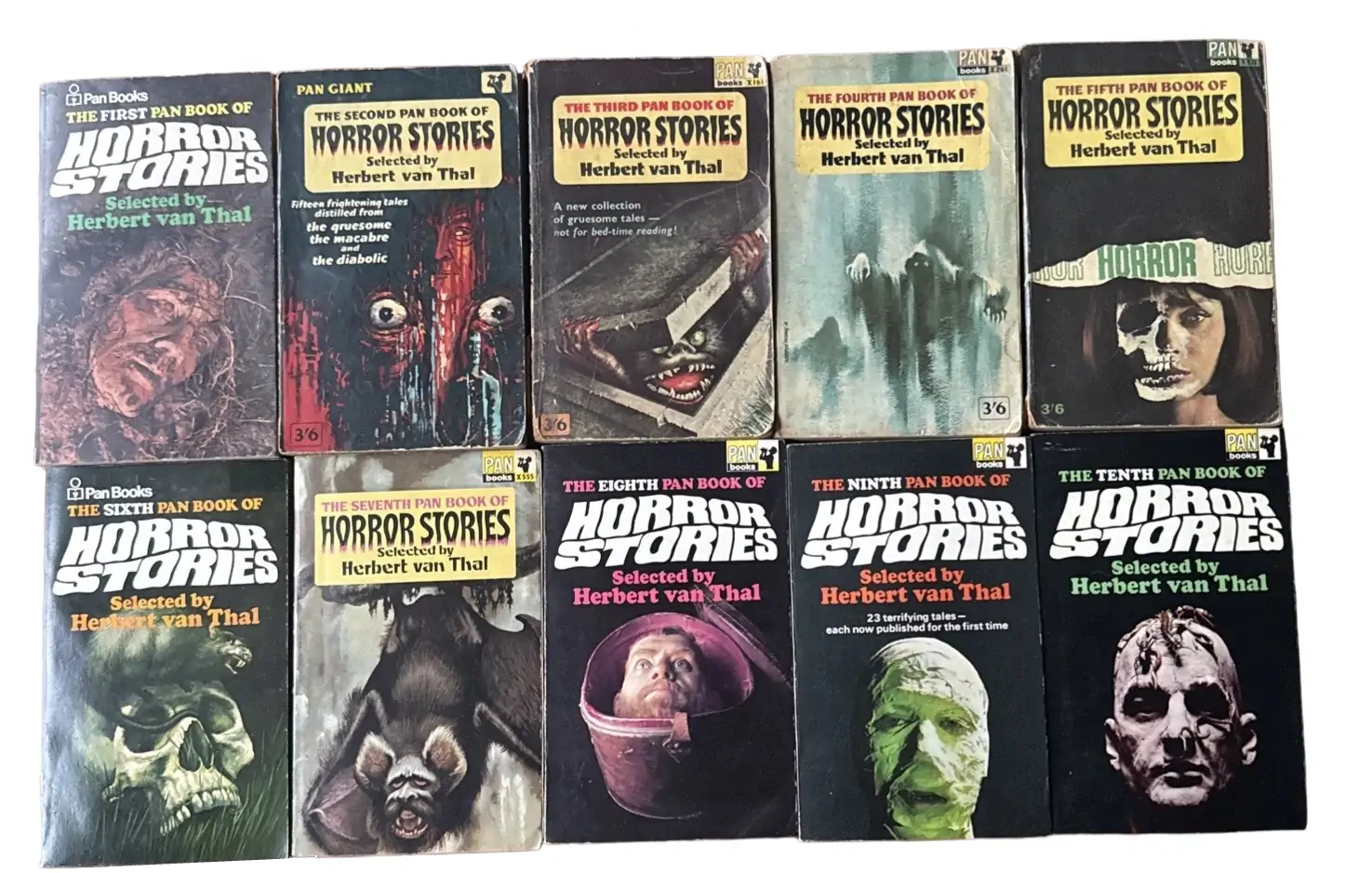
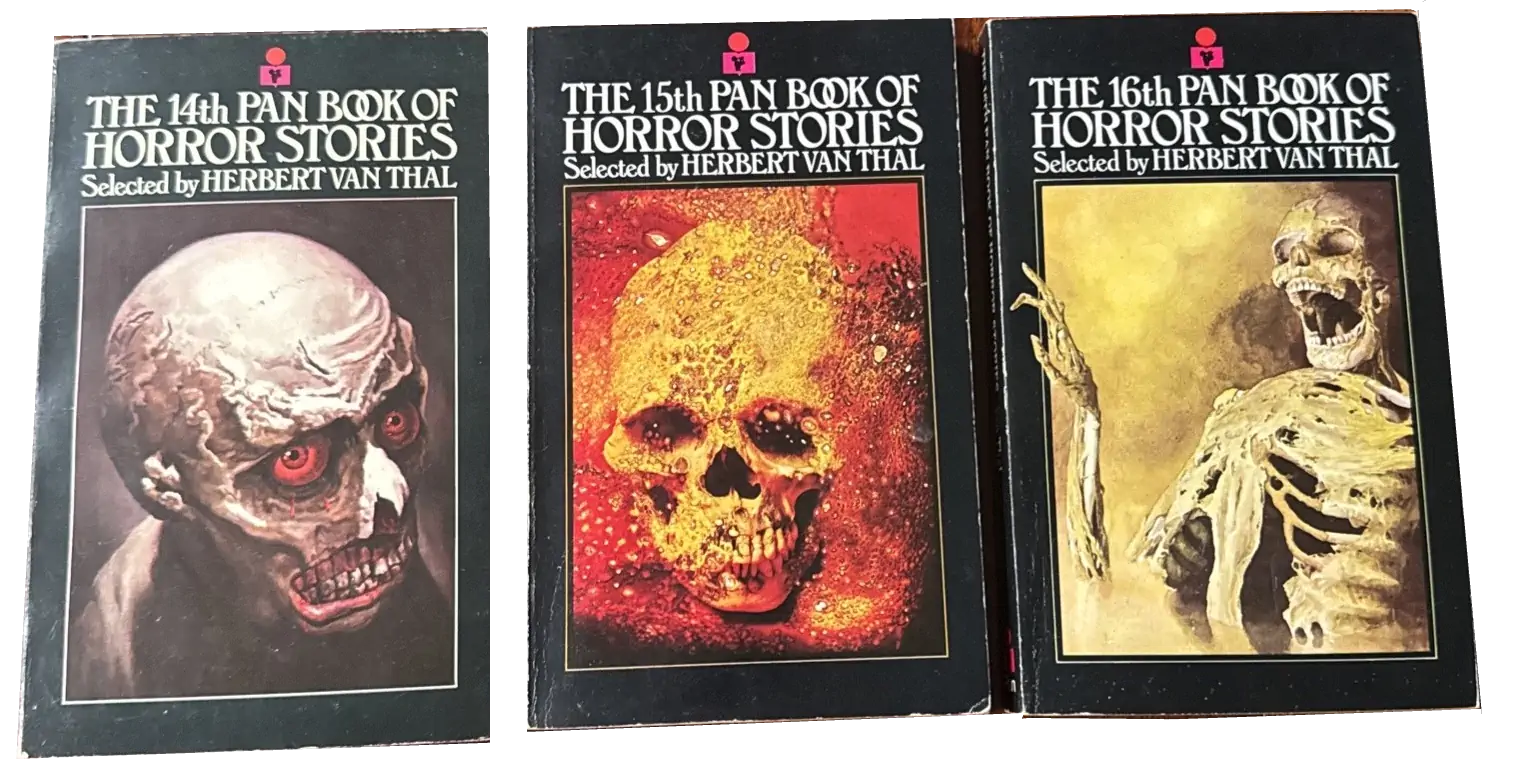
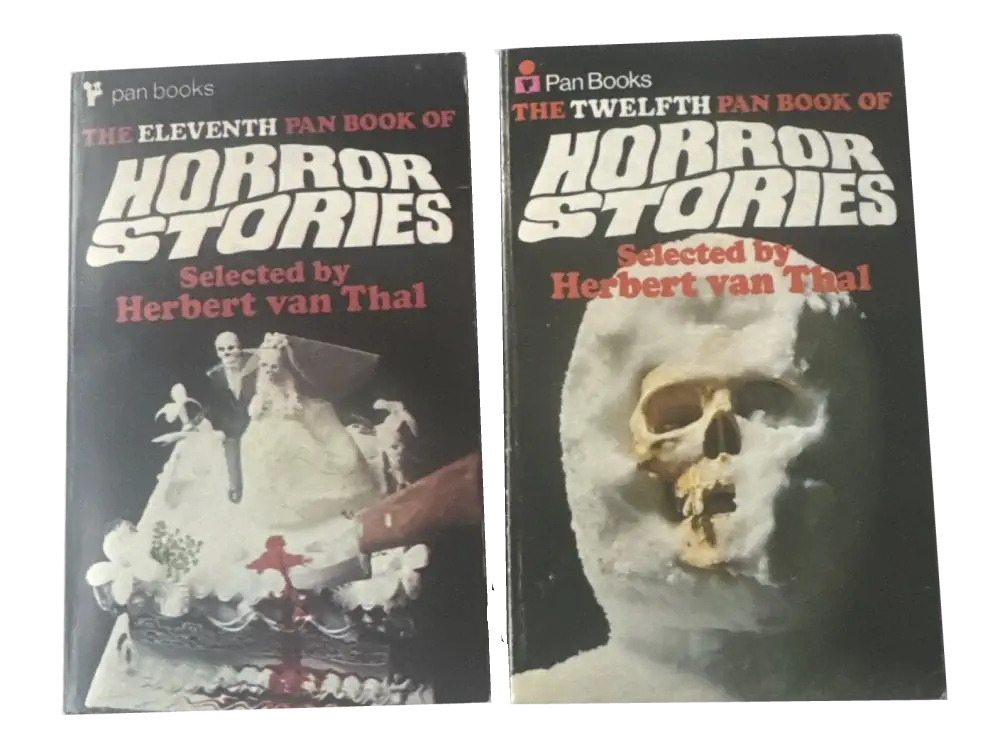
The Pan Books of Horror Stories combined supernatural tales, psychological horror, macabre fiction and, increasingly, stories designed to shock. Just as memorable were the covers. Skulls, severed heads, decomposing faces and other suitably unpleasant subjects helped make the books instantly recognisable, and today the covers are an important part of their appeal to collectors.
The series began in 1959 with The Pan Book of Horror Stories, selected by Herbert van Thal. It proved sufficiently successful to become an annual institution, eventually running to thirty volumes and three decades.
Herbert van Thal and the Pan Horrors
Herbert van Thal (1904–1983) was an author, editor and anthologist with a particular interest in crime, mystery and supernatural fiction. His selections for Pan mixed established writers with contemporary and lesser-known authors, giving the books a rather broader literary pedigree than their increasingly lurid appearance might suggest.
The first volume alone included stories by Joan Aiken, A. L. Barker, C. S. Forester, L. P. Hartley, Nigel Kneale, Muriel Spark and Bram Stoker.
Among its most memorable inclusions was Stoker’s particularly unpleasant tale The Squaw. H. P. Lovecraft was represented through The Horror in the Museum, written for Hazel Heald, while later volumes introduced readers to writers including Ray Bradbury, Lord Dunsany, Basil Copper, Charles Birkin and R. Chetwynd-Hayes.
For some authors the Pan series provided valuable early exposure. British horror writer Basil Copper, for example, made his Pan Horror debut with The Spider in the fifth volume.
The contents evolved as the series continued. Supernatural and traditional macabre fiction increasingly shared space with graphic contemporary horror, and the Pan anthologies developed a reputation for stories that could be decidedly gruesome.
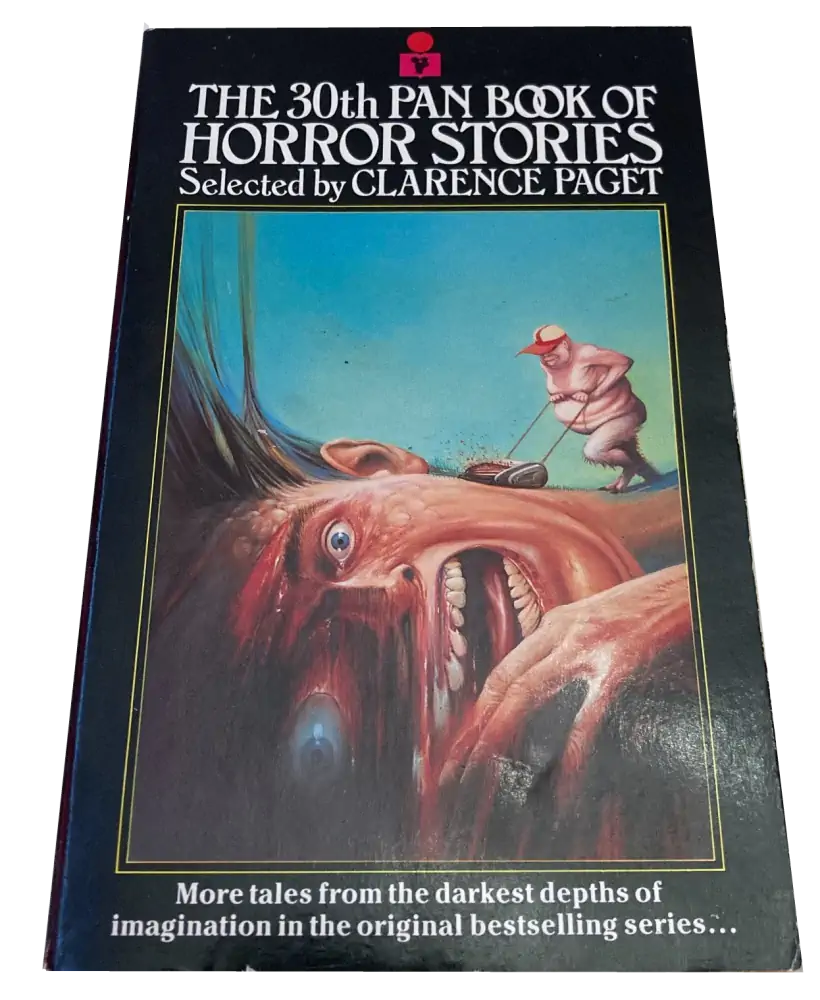
Van Thal remained associated with the series until his death in 1983. Clarence Paget subsequently became editor, beginning with the 26th volume in 1985 and continuing through to the final collection.
Those Pan Horror Covers
For collectors, however, the stories are only half the attraction.
Pan was famous for its paperback artwork and the Horror series developed a particularly distinctive visual identity. Early editions can be found with comparatively restrained designs, but subsequent printings and later volumes embraced increasingly macabre imagery.
This means collecting Pan Horror is not necessarily as simple as obtaining thirty books.
Popular volumes went through numerous printings and could appear with substantially different covers. The original 1959 first volume, for example, is associated with its striking black cat cover. Later editions appeared with completely different artwork, and even the title evolved: early copies were simply The Pan Book of Horror Stories, with the designation First becoming necessary as the series established itself.
Collectors can therefore pursue the basic thirty-volume run, particular generations of cover designs, first editions or even the numerous cover variations.
Condition can be challenging. These were inexpensive paperbacks intended to be read rather than carefully preserved. Creased spines, rubbed covers, inscriptions, browned pages and loose leaves are consequently common. Copies retaining bright, undamaged covers have particular visual appeal when the books are displayed together.
Pan Books of Horror Stories Checklist
The original numbered series consists of the following thirty volumes:
- The First Pan Book of Horror Stories – 1959
- The Second Pan Book of Horror Stories – 1960
- The Third Pan Book of Horror Stories – 1962
- The Fourth Pan Book of Horror Stories – 1963
- The Fifth Pan Book of Horror Stories – 1964
- The Sixth Pan Book of Horror Stories – 1965
- The Seventh Pan Book of Horror Stories – 1966
- The Eighth Pan Book of Horror Stories – 1967
- The Ninth Pan Book of Horror Stories – 1968
- The Tenth Pan Book of Horror Stories – 1969
- The Eleventh Pan Book of Horror Stories – 1970
- The Twelfth Pan Book of Horror Stories – 1971
- The Thirteenth Pan Book of Horror Stories – 1972
- The Fourteenth Pan Book of Horror Stories – 1973
- The Fifteenth Pan Book of Horror Stories – 1974
- The Sixteenth Pan Book of Horror Stories – 1975
- The Seventeenth Pan Book of Horror Stories – 1976
- The Eighteenth Pan Book of Horror Stories – 1977
- The Nineteenth Pan Book of Horror Stories – 1978
- The Twentieth Pan Book of Horror Stories – 1979
- The Twenty-First Pan Book of Horror Stories – 1980
- The Twenty-Second Pan Book of Horror Stories – 1981
- The Twenty-Third Pan Book of Horror Stories – 1982
- The Twenty-Fourth Pan Book of Horror Stories – 1983
- The Twenty-Fifth Pan Book of Horror Stories – 1984
- The Twenty-Sixth Pan Book of Horror Stories – 1985
- The Twenty-Seventh Pan Book of Horror Stories – 1986
- The Twenty-Eighth Pan Book of Horror Stories – 1987
- The Twenty-Ninth Pan Book of Horror Stories – 1988
- The Thirtieth Pan Book of Horror Stories – 1989
The sequence is unusually satisfying for collectors: apart from the gap between the second and third books, there is effectively one new numbered volume for every year from 1962 until the series ended in 1989.
Building a Collection
A straightforward collection of all thirty numbered books is an achievable project, but there is plenty of scope to take it further.
Collectors interested in paperback art can search for different cover variants, while bibliophiles may prefer the earliest printing of each volume. The publishing details inside the book are important because a familiar-looking vintage cover does not necessarily indicate a first printing.
The series also provides a snapshot of changing British attitudes towards horror. What began in 1959 as a mixture of established macabre fiction and contemporary writing survived through the horror boom of the 1970s and into a very different market in the 1980s.
Pan returned to the original anthology in 2010 with a special edition celebrating the series, complete with an introduction by horror historian Johnny Mains.
Yet for many collectors it is the battered original paperbacks that retain the greatest charm. A shelf containing all thirty – preferably with an assortment of Pan’s wonderfully gruesome covers facing outward – is both a collection of horror fiction and a miniature history of British popular publishing.
Related Collectibles on eBay
 The 28th Pan Book of Horror Stories Clarence Paget Pan Paperback Horror English
£42.30
The 28th Pan Book of Horror Stories Clarence Paget Pan Paperback Horror English
£42.30
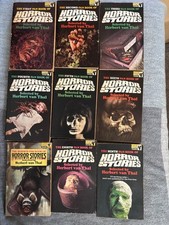 Pan Books of Horror Stories 1-18, 20-23, 25-27
£21.50
Pan Books of Horror Stories 1-18, 20-23, 25-27
£21.50
 The 2nd Pan Book of Horror Stories - Selected by Herbert van Thal PB 1960
£14.90
The 2nd Pan Book of Horror Stories - Selected by Herbert van Thal PB 1960
£14.90
 Vintage Paperback The Eighth Pan Book of Horror Stories Herbert van Thal
£9.99
Vintage Paperback The Eighth Pan Book of Horror Stories Herbert van Thal
£9.99
 The Pan Book of Horror Stories Book Bundle x 7 - 1st / 12th / 14th /15th/16th et
£39.99
The Pan Book of Horror Stories Book Bundle x 7 - 1st / 12th / 14th /15th/16th et
£39.99
 Vintage The Seventh Pan Book of Horror Stories Herbert van Thal Papeback
£5.45
Vintage The Seventh Pan Book of Horror Stories Herbert van Thal Papeback
£5.45
 The First Pan Book of Horror Stories - 1st paperback edition (1959)
£19.99
The First Pan Book of Horror Stories - 1st paperback edition (1959)
£19.99
 The Pan Book of Horror Stories Paperback Short Stories - Van Thal, Paget
£312.70
The Pan Book of Horror Stories Paperback Short Stories - Van Thal, Paget
£312.70
eBay listings may contain affiliate links. We may earn a commission from qualifying purchases.