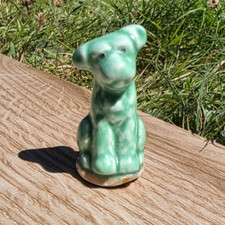
SylvaC dogs are among the most varied and characterful animal figures produced by Shaw & Copestake. While the famous SylvaC rabbits are perhaps the company’s most immediately recognisable animals, dogs formed an exceptionally large part of the range, with numerous breeds, sizes, poses and colourways produced over several decades.
From realistically modelled spaniels and terriers to comic dogs, planters and novelty wares, the range provides an enormous field for collectors. Model numbers are particularly important for identification, while the work of individual modellers including Reginald Thompson and Otakar Steinburger adds another fascinating dimension.
This guide looks at some of the principal SylvaC dog models, breeds and designers, together with identification information and documented auction prices.
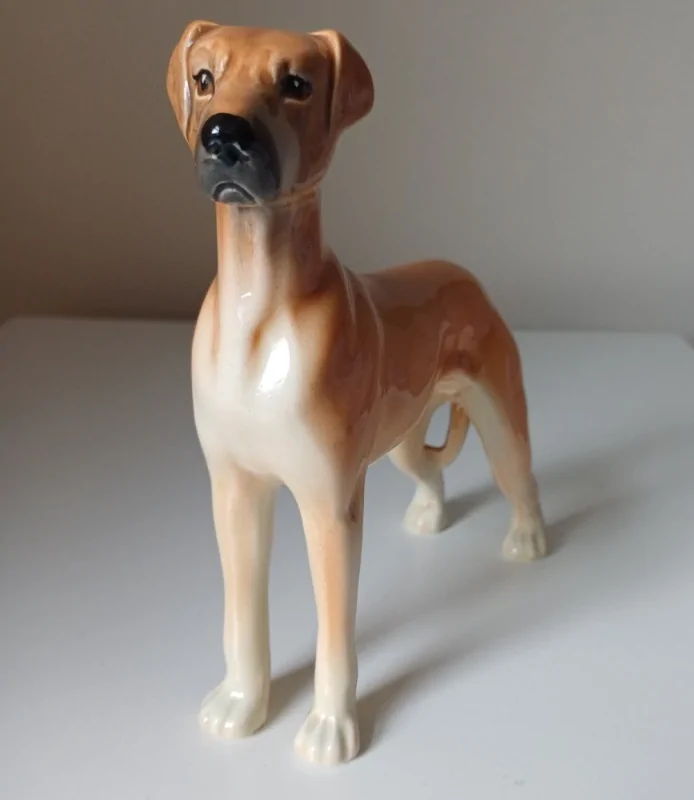
Collecting SylvaC Dogs
Animal modelling became one of the great strengths of SylvaC pottery. Dogs were especially important, and the company eventually produced a remarkably extensive range encompassing both popular breeds and more humorous character pieces.
Terriers and Scotties were natural subjects for British decorative pottery, but SylvaC also modelled spaniels and many other breeds and types. Some were produced as straightforward figures, while dogs also appeared as planters, cruets and other novelty wares.
This variety makes collecting SylvaC dogs particularly interesting. A collection can be organised by breed, model number, modeller, colour or type of ware, and some collectors concentrate on finding different colourways of the same model.
SylvaC Dog Model Numbers
The impressed number found on many SylvaC pieces is an important aid to identification. It represents the factory model number rather than the year in which the piece was made.
This is particularly useful with dogs because auctioneers and sellers do not always identify the breed or model accurately. A dog may simply be catalogued as a “SylvaC dog”, even though its model number and modelling allow a much more precise identification.
As this World Collectors Net guide develops, we will add further model numbers, breeds, colourways and photographs to build a more comprehensive reference.
SylvaC Spaniel Model 1382
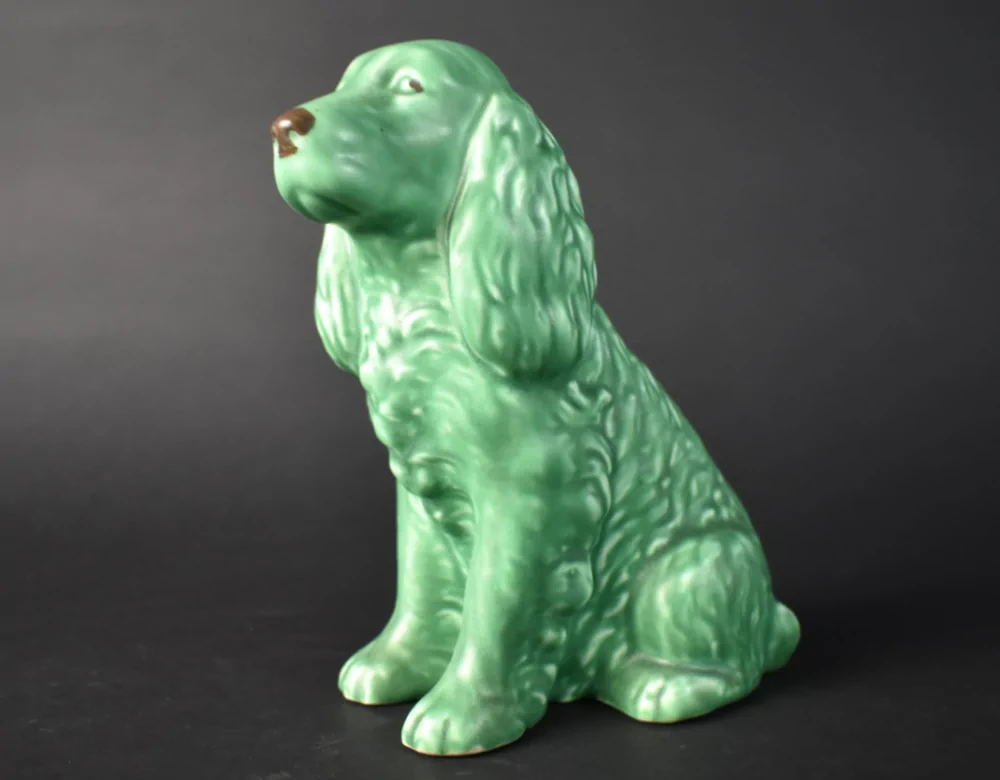
Model 1382 is a particularly attractive spaniel-type dog. A green example appearing at auction in 2026 was catalogued simply as a “Study of a Dog”, illustrating why model numbers and comparison with known examples are so useful to collectors.
The figure has the long ears and facial modelling characteristic of a spaniel and was produced in the matt colour glazes strongly associated with SylvaC animals.
A green SylvaC Spaniel model 1382 sold at Brettells on 18 August 2026 for £38.
SylvaC Joey Model 1192
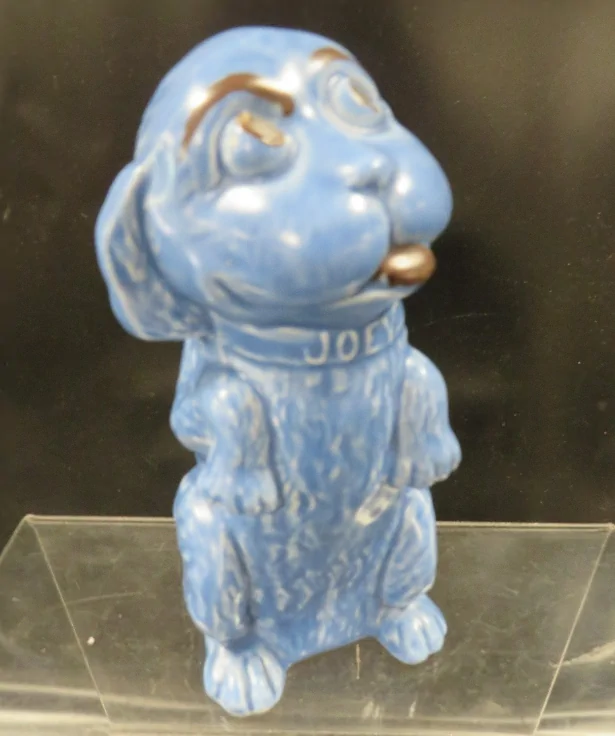
Another named SylvaC dog is Joey, model 1192. The model demonstrates the considerable personality that SylvaC modellers were able to give their animal figures.
A blue example of SylvaC Joey model 1192 sold at Cuttlestones on 6 August 2026 for £45.
The result also demonstrates the importance of recording colour when comparing examples. SylvaC dogs can occur in different glazes and colourways, and these variations can influence collector demand.
Terriers and Scottie Dogs
Terriers form an important part of the SylvaC dog range. Their distinctive shapes and personalities made them ideal subjects for pottery modelling, and numerous versions appeared during the long production history of Shaw & Copestake.
Among the most interesting are the scarce Mac Scottie Dogs, a group associated with the Czech-born sculptor and modeller Otakar Steinburger.
The Mac Scotties were produced as a series of related models in different sizes. Models associated with the series include 1205, 1206, 1207, 1208 and 1209. Their stylised modelling makes them noticeably different from some of SylvaC’s more naturalistic dogs.
Steinburger worked as a freelance modeller and his association with these distinctive Scotties gives them additional interest for collectors of British ceramic design.
The SylvaC Toothache Dog
One of the most memorable comic SylvaC dogs is the Toothache Dog, associated with long-serving SylvaC modeller and designer Reginald Thompson.
Rather than depicting a conventional pedigree dog standing or sitting for inspection, the design uses exaggerated expression and pose to create a humorous character. Pieces such as this helped give SylvaC animals a personality quite different from more formal ceramic animal figures.
The Toothache Dog is an excellent example of the humour that appears throughout SylvaC production and is a model we will examine in more detail as further examples and auction results are recorded.
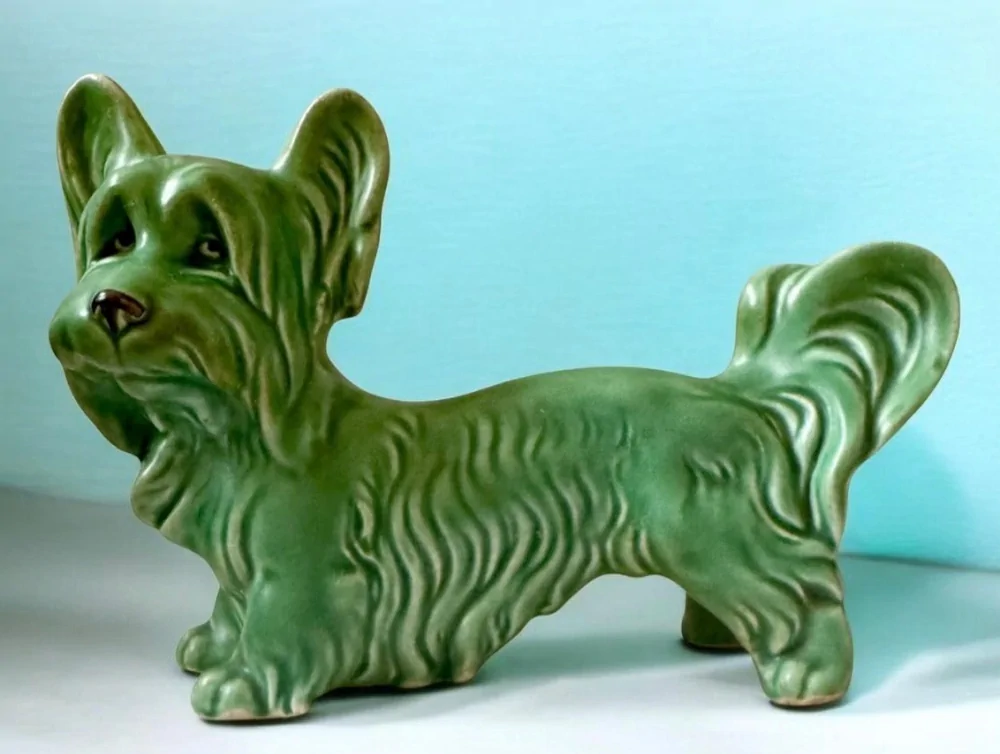
Reginald Thompson and the SylvaC Dogs
Reginald Thompson was one of the most important figures in the development of SylvaC modelling. He joined Shaw & Copestake in the early twentieth century and became closely involved with the modelling and design of the company’s animal and novelty wares.
His long association with the factory spans an important period in which SylvaC developed the distinctive animal figures for which it is now best known.
Thompson’s work demonstrates why it is worth looking beyond model numbers when studying SylvaC. Identifying the modeller can place an apparently simple pottery dog within the broader history of twentieth-century British ceramic design.
Other SylvaC Designers and Modellers
Reginald Thompson and Otakar Steinburger were not the only people involved in SylvaC animal modelling. Other names associated with later SylvaC design include Stephen Czarnota, John Lawson and George Mathews.
Czarnota, a Hungarian modeller, worked on a number of the more characterful and comic designs. John Lawson worked alongside members of the design team during the early 1960s before emigrating to America in 1966, while George Mathews joined in 1966 and worked on later animals, ornamental wares and tableware.
Connecting individual models securely with their designers is an area where further research is worthwhile, and we will add specific attributions to this guide where they can be reliably documented.
SylvaC Dog Planters and Novelty Wares
Dogs were not restricted to freestanding figures. Shaw & Copestake incorporated them into planters, cruets and novelty wares, greatly expanding the range available to collectors.
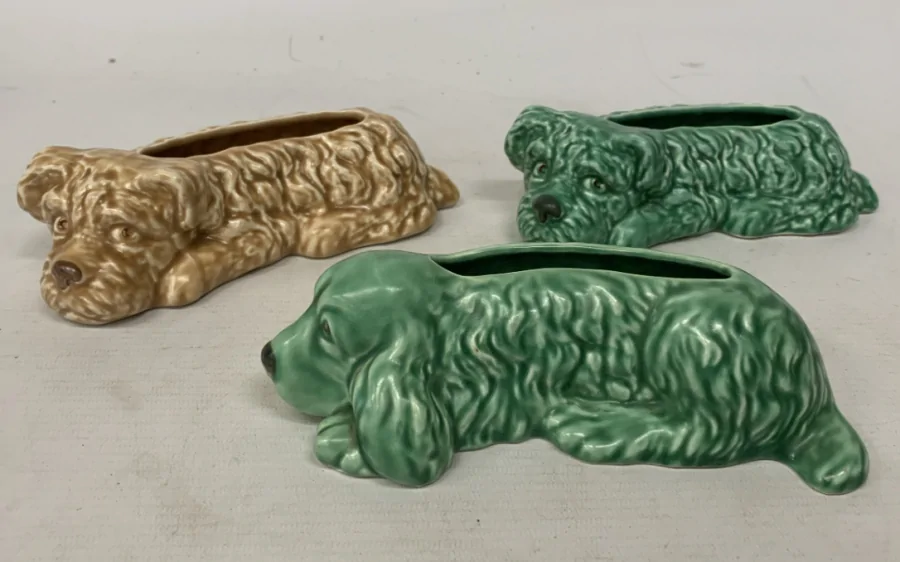
A striking example of how values can vary appeared at Ashley Waller in June 2026, when three vintage SylvaC dog planters sold together for only £5.
The low price is useful market evidence. Age and the SylvaC name do not automatically make every piece valuable. Model, rarity, colour, condition and current collector demand can make a considerable difference.
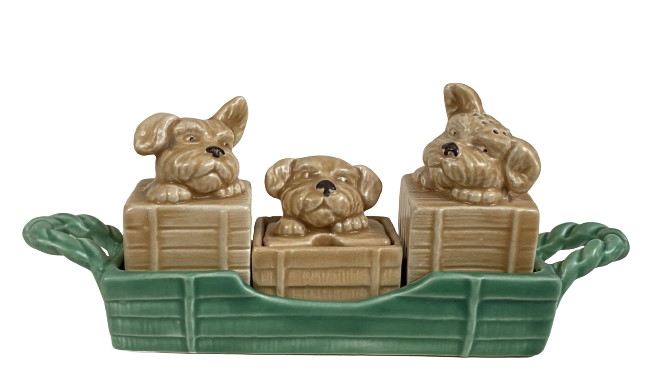
Another unusual example is the SylvaC model 1715 Dog Cruet Condiment Set, which demonstrates the imaginative ways in which the factory incorporated dogs into functional and novelty pottery.
SylvaC Dog Colours and Glazes
One of the pleasures of collecting SylvaC dogs is the range of glazes. The matt green glaze associated so strongly with SylvaC animals is only part of the story.
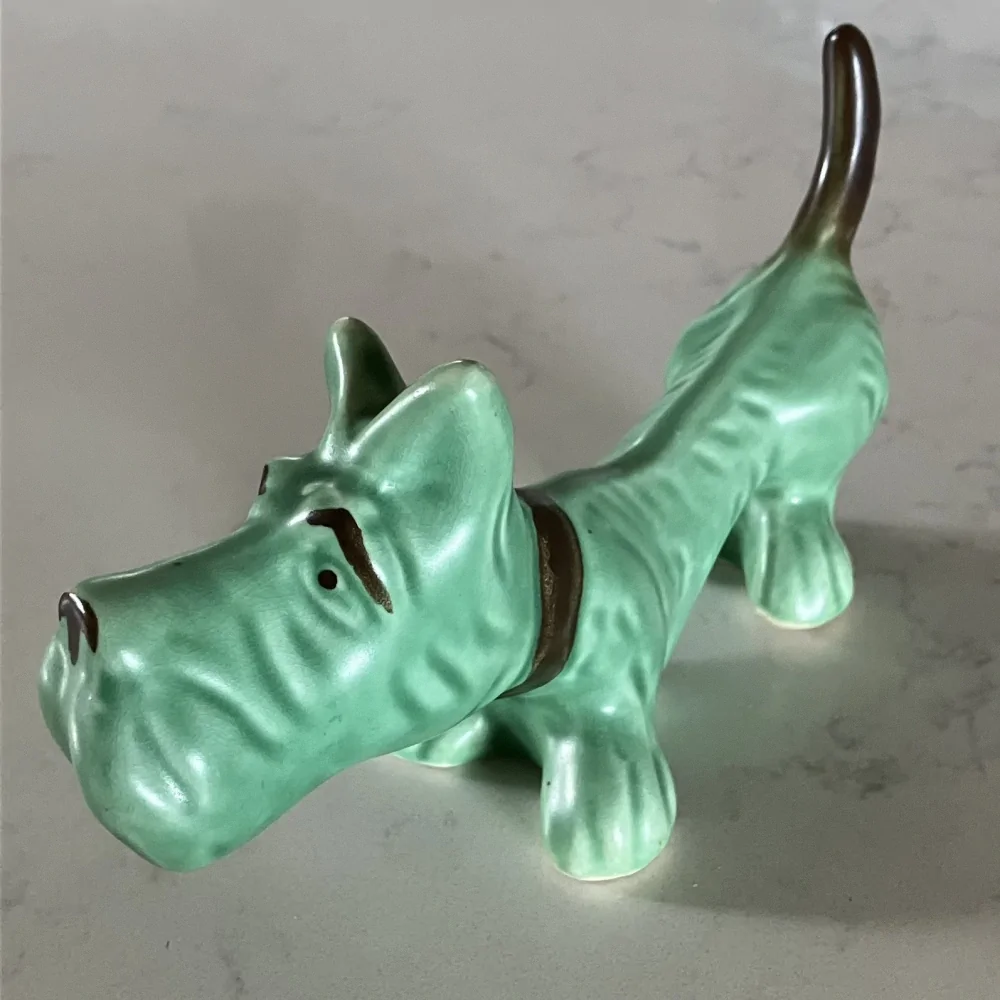
Dogs can also be encountered in blue, brown, grey and other colourways, together with more naturalistic decoration and later glossy finishes. Different colours of the same model can vary considerably in scarcity.
Colour alone should never be used to authenticate a piece. It should be considered alongside the model number, dimensions, modelling, glaze and factory marks.
Identifying Genuine SylvaC Dogs
Popular SylvaC animal designs have been copied and reproduced, so collectors should examine more than the name or mark on the base.
Where possible, compare the model number, dimensions, moulding, glaze and marks with a documented genuine example. Sharpness of detail can be particularly useful. Copies produced by taking a mould from an existing ceramic figure can lose detail and may also be slightly smaller because of shrinkage during manufacture.
Look closely at details such as eyes, fur, paws, ears and facial modelling. An impressed model number can be extremely helpful, but identification should ideally be based on several characteristics rather than a single mark.
For more information about SylvaC marks, model numbers and the history of Shaw & Copestake, see our SylvaC Pottery – History, Identification and Collecting Guide.
How Much Are SylvaC Dogs Worth?
There is no useful single value that can be applied to all SylvaC dogs. Recent results demonstrate prices ranging from only a few pounds for groups of less sought-after pieces to substantially higher prices for desirable models, colours and rarities.
For this reason World Collectors Net prefers to record actual auction and sale results rather than apply broad fixed price ranges.
When assessing a SylvaC dog, consider the model number, breed, size, colourway, rarity and condition. Unusual models and scarce colour combinations can command considerably more than relatively common examples.
Recent SylvaC Dog Auction Prices
SylvaC Spaniel Model 1382 – £38
A green SylvaC Spaniel model 1382 sold at Brettells on 18 August 2026 for a hammer price of £38. The auction catalogue described the figure simply as a “Study of a Dog”.
SylvaC Joey Model 1192 – £45
A blue SylvaC Joey dog, model 1192, sold at Cuttlestones on 6 August 2026 for a hammer price of £45.
Three SylvaC Dog Planters – £5
A group of three vintage SylvaC dog planters sold at Ashley Waller on 17 June 2026 for a hammer price of £5.
These results demonstrate why individual identification matters. Even within one collecting subject there can be substantial differences in demand and value.
Condition
Condition can have a significant effect on the value of a SylvaC dog. Ears, tails, paws and other projecting parts should be checked carefully for chips and restoration.
Also look for hairline cracks, staining and crazing. Some crazing is commonly encountered on vintage glazed pottery, but extensive crazing or staining may make an otherwise desirable model less attractive to collectors.
Restoration is not always immediately obvious, particularly around ears and feet, so examining a figure carefully under good light is advisable.
Building a Collection of SylvaC Dogs
The enormous variety of SylvaC dogs means that it is possible to build a collection in many different ways. Some collectors concentrate on a particular breed, while others seek different colours of one model or examples associated with a particular modeller.
Model numbers provide another satisfying approach. Recording the number, colour, dimensions, marks and provenance of each dog gradually builds a useful reference as well as a collection.
World Collectors Net will continue to expand this page with additional SylvaC dog model numbers, breeds, photographs, designers and documented auction results.
More SylvaC Guides on World Collectors Net
- SylvaC Pottery – History, Identification and Collecting Guide – our main reference to Shaw & Copestake, SylvaC history, designers, animals, marks and identification.
- SylvaC Pink Rabbits – Models, Identification and Price Guide – pink colourways, rabbit model numbers and documented sale prices.
- SylvaC Squirrel Model 1144 – Identification and Price Guide – identification, colours and recent prices for the classic squirrel.
- SylvaC Model 1715 Dog Cruet Condiment Set – an unusual example of SylvaC dog-themed novelty ware.
Related Collectibles on eBay
 Vintage Sylvac terrier Puppy Dog Figurine Beige Ceramic Pottery
£12.94
Vintage Sylvac terrier Puppy Dog Figurine Beige Ceramic Pottery
£12.94
 2 SylvaC Comical Dogs, 1247 and 2950. Excellent condition
£21.50
2 SylvaC Comical Dogs, 1247 and 2950. Excellent condition
£21.50
 Sylvac 1715 Ceramic Cruet Set Green Beige Dog Animal Lovely Condition
£83.89
Sylvac 1715 Ceramic Cruet Set Green Beige Dog Animal Lovely Condition
£83.89
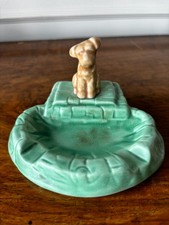 Vintage Sylvac Pottery Dog Ashtray 1455
£9.73
Vintage Sylvac Pottery Dog Ashtray 1455
£9.73
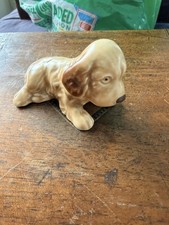 Vintage Sylvac Spaniel Puppy Dog Figurine Beige Ceramic Pottery
£12.94
Vintage Sylvac Spaniel Puppy Dog Figurine Beige Ceramic Pottery
£12.94
 Sylvac Puppy & Slipper...Model 2051 In Excellent Condition
£16.15
Sylvac Puppy & Slipper...Model 2051 In Excellent Condition
£16.15
 Sylvac 1578 Green Dog Scottish Terrier
£10.80
Sylvac 1578 Green Dog Scottish Terrier
£10.80
 SylvaC No 145 Rare Standing SCOTTISH TERRIER other dogs rabbits facepots listed
£31.90
SylvaC No 145 Rare Standing SCOTTISH TERRIER other dogs rabbits facepots listed
£31.90
eBay listings may contain affiliate links. We may earn a commission from qualifying purchases.