Boch Frères Art Deco pottery, renowned for its timeless elegance and captivating designs, has its origins in the 1841 founding of the Keramis Pottery at La Louvière, Belgium. The Boch family, pioneers in the ceramics industry, played a crucial role in establishing a lasting legacy in the field. In this feature, we explore the unique designs of Boch Frères Art Deco pottery and the influence of Charles Catteau, along with a price guide of vases sold at auction.

With a history dating back to the 18th century, the Boch family has been a significant force in the European ceramics industry. They founded the Keramis Pottery in La Louvière, Belgium, a region recognized for its abundant clay deposits. Boch Frères soon rose to prominence as a leading ceramic manufacturer in Europe, producing high-quality tableware, decorative objects, and tiles. The pottery from this factory is often referred to as Boch Frères Keramis.

Art Deco and Boch Frères
The Art Deco movement, which emerged in the 1920s and 1930s, had a significant impact on the world of design and decorative arts. The Boch Frères pottery fully embraced this new aesthetic, producing a range of ceramics that captured the essence of Art Deco style. Their designs included natural designs and others that featured geometric shapes, bold colours, and striking patterns that represented the modernity and dynamism of the era. This unique blend of traditional craftsmanship and contemporary design made Boch Frères Art Deco pottery highly sought after by collectors and enthusiasts alike.

Charles Catteau, a French artist, and designer, played a critical role in shaping the artistic direction of Boch Frères during the Art Deco period. Catteau joined the company in 1906 and quickly rose through the ranks and in 1907, he was appointed head of the Decoration Department and Workshop of Imaginative Design. In 1925 he won the gold medal of the Paris Exhibition of Decorative and Industrial Arts. His tenure lasted as head of until 1945, during which he oversaw the creation of numerous iconic pieces, although he remained at the factory until 1948.

Catteau’s design philosophy centred on the fusion of traditional and modern elements, often drawing inspiration from nature, folklore, and the prevailing Art Deco style. His exceptional talent for combining colours and patterns earned him widespread recognition, and his innovative designs significantly contributed to the enduring popularity of Boch Frères Art Deco pottery.

While Charles Catteau was undoubtedly the most influential designer at Boch Frères during the 1920s and 1930s, several other talented artists contributed to the company’s success in this period. Working under Catteau’s direction, these designers played a significant role in shaping the Art Deco style that Boch Frères is famous for today.
One such designer was Leon Delfant, who joined Boch Frères in the early 1920s. Delfant was skilled in creating intricate geometric patterns and stylized floral designs, which he applied to a wide range of ceramic objects. His work added depth and variety to the Boch Frères Art Deco collection and helped establish the company’s reputation for innovative design.
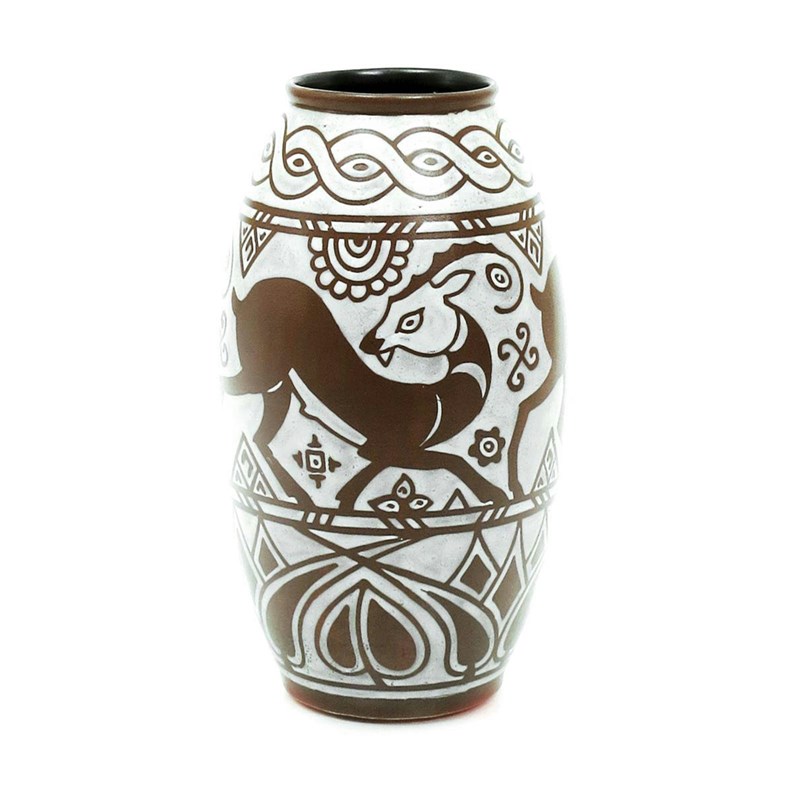
Another noteworthy designer from this era was Raymond-Henri Chevallier. Chevallier worked at Boch Frères in the late 1920s and 1930s, focusing primarily on creating striking and colorful glazes. His experiments with various glazing techniques resulted in vibrant, high-gloss finishes that became a signature element of Boch Frères Art Deco ceramics.
Maurice Dufrene, a well-known French designer, also collaborated with Boch Frères during the Art Deco period. Dufrene designed a range of ceramics that showcased his flair for combining bold colors and geometric shapes. His innovative designs further enriched the Art Deco collection and helped solidify Boch Frères’ position as a leading ceramic manufacturer.
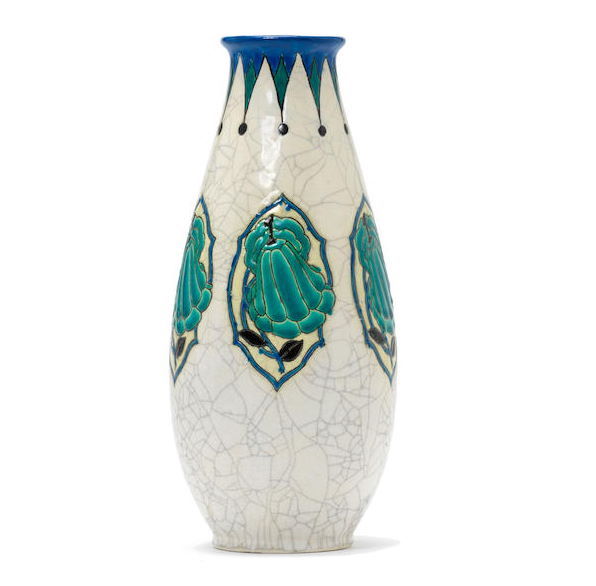
These designers, working alongside Charles Catteau, played a crucial role in defining the artistic direction of Boch Frères during the 1920s and 1930s. Their collective talent and creativity contributed to the enduring appeal of Boch Frères Art Deco pottery, which continues to captivate collectors and enthusiasts to this day.
The pieces created during the Art Deco are of particular interest to collectors. Today, these distinctive ceramics, in a variety of styles, are highly collectible and can be found in museums, galleries, and private collections around the world.
Related
The Art Deco Ceramics of Primavera
Collecting guide: Charles Catteau’s Boch Frères ceramics