The Epsom Derby is one of the world’s most famous horse races, and for generations its winners have been celebrated through paintings, prints, ceramics and other commemorative objects. Among the more unusual and attractive souvenirs are Derby silk scarves, produced to commemorate winning horses and record the history of the race.
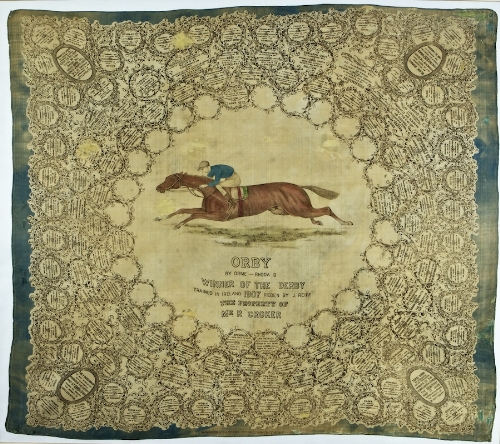
These colourful textiles combine sporting history with decorative design. Many feature a central portrait of the winning horse, often accompanied by the jockey and owner’s racing colours, surrounded by smaller illustrations or inscriptions recording earlier Derby winners.
The tradition extends back into the nineteenth century and continued well into the twentieth. Examples associated with horses such as Voltigeur, Lord Lyon, Orby, Nimbus, Arctic Prince and Psidium have appeared at auction, attracting interest from collectors of horse racing memorabilia, historic textiles and equestrian art.
The History of Derby Commemorative Scarves
The first Epsom Derby took place in 1780, and the race quickly became one of the great events of the British sporting calendar. Its winning horses, owners and jockeys became familiar names, and commemorative merchandise offered enthusiasts a way of celebrating each year’s result.
Silk scarves were particularly well suited to this purpose. Their large square format provided room for elaborate printed designs, while silk gave the finished object a fashionable and luxurious quality.
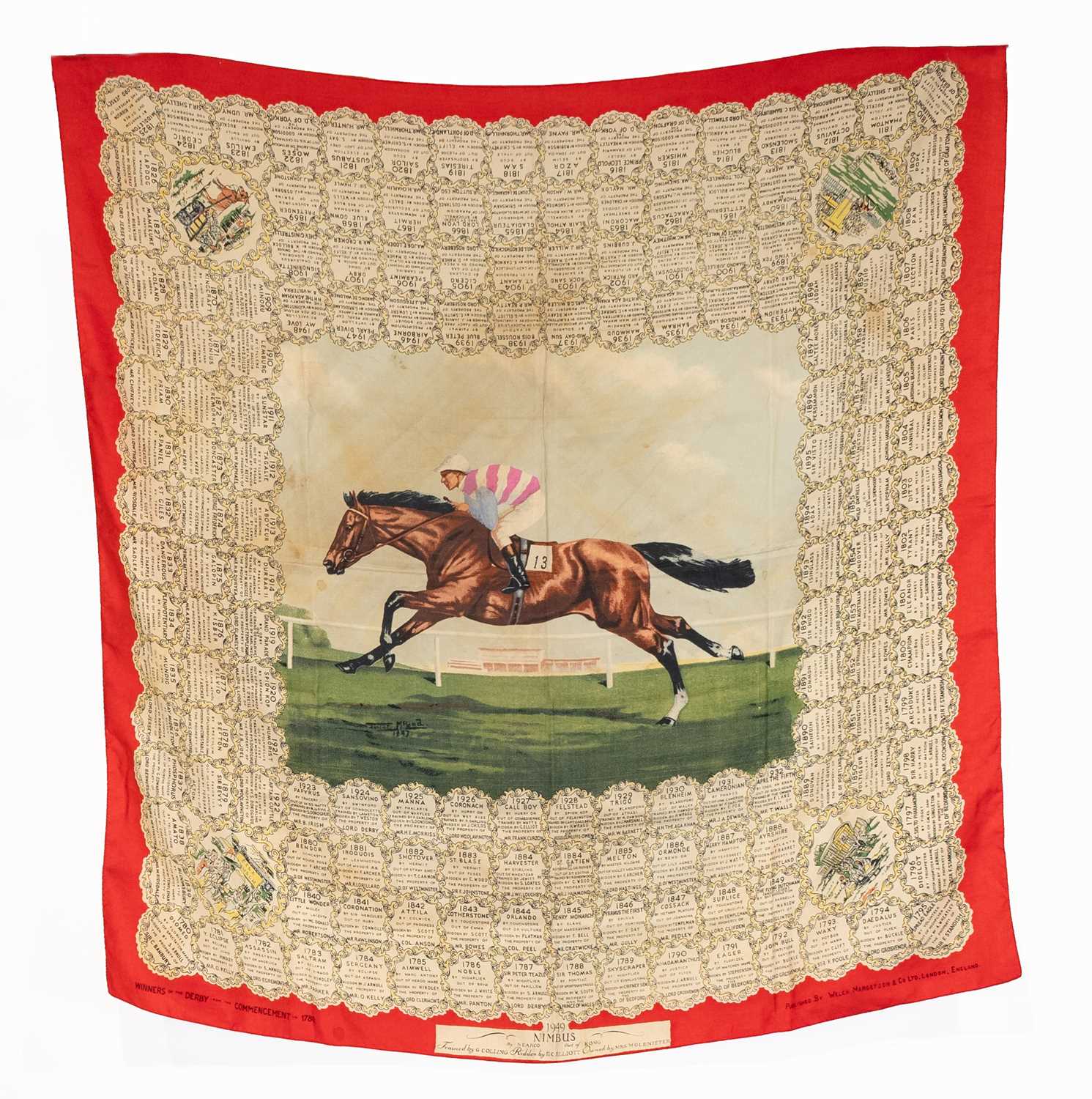
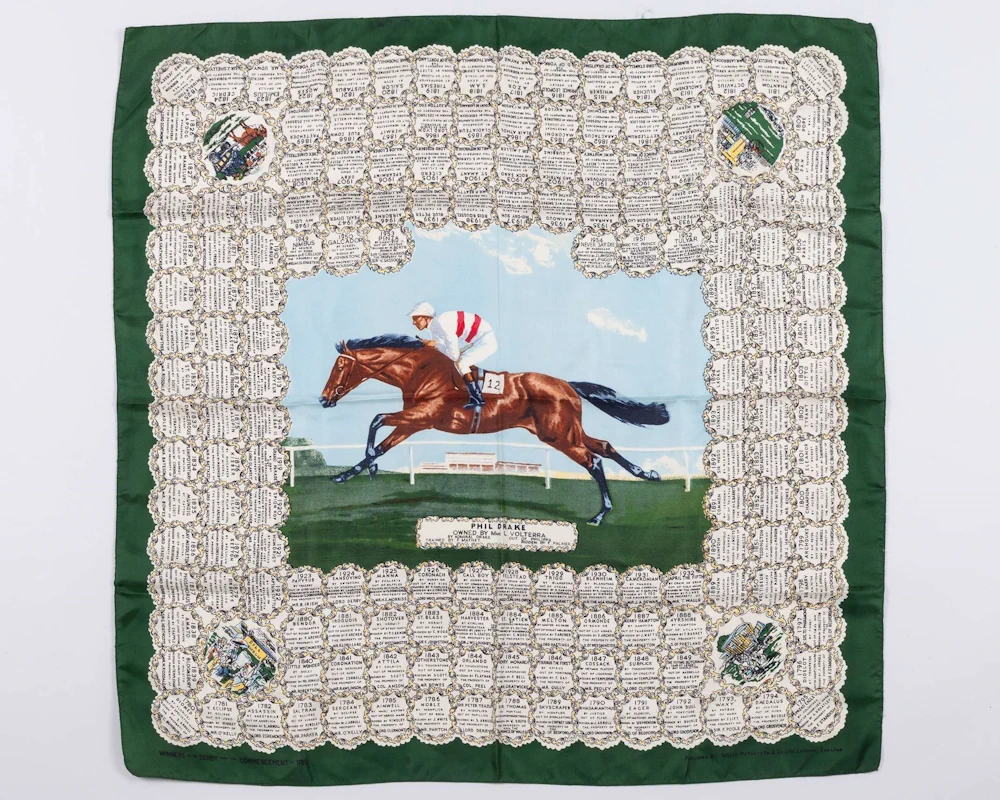
A recurring design places the latest Derby winner at the centre, surrounded by a decorative arrangement of previous winners. Some examples record results from the race’s beginnings in 1780, making them fascinating historical documents as well as attractive textiles.
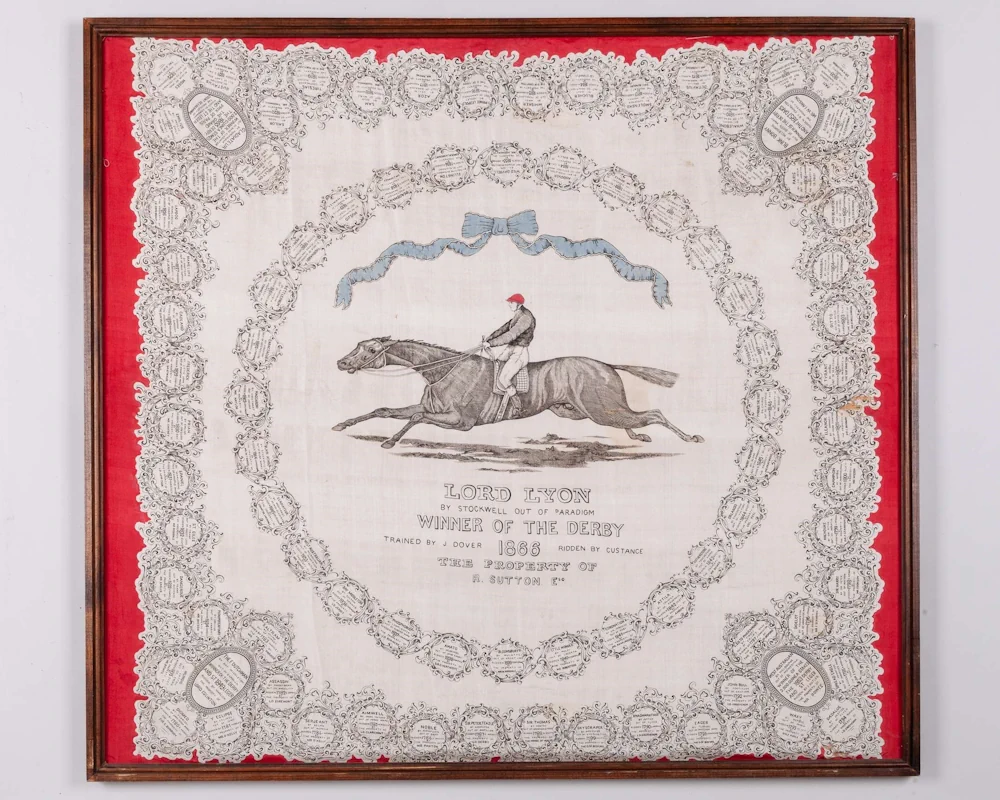
An 1866 scarf celebrating Lord Lyon demonstrates that the tradition was already established during the Victorian period. Later examples show how the format continued to evolve, with changes in typography, colour, illustration and printing techniques.
Designs, Artists and Manufacturers
One particularly interesting aspect of collecting Derby scarves is the variation in their designs.
The 1949 scarf celebrating Nimbus, for example, features the horse wearing Mrs McGlenister’s racing colours, surrounded by a record of earlier Derby winners. The scarf was published by Welch, Margetson & Co. of London, an important detail for collectors researching the commercial production of these textiles.
A 1951 scarf celebrating Arctic Prince was catalogued with artwork attributed to Juliet McLeod, demonstrating how individual artists can sometimes be associated with particular designs.
Collectors should look for printed signatures, publishers’ names, inscriptions and other identifying details, as these can help establish a scarf’s date and origin.
Derby Silk Scarves – Auction Results and Price Guide
The following examples demonstrate the range of prices achieved at auction. The figures are reported hammer prices, excluding buyers’ premiums and other charges.
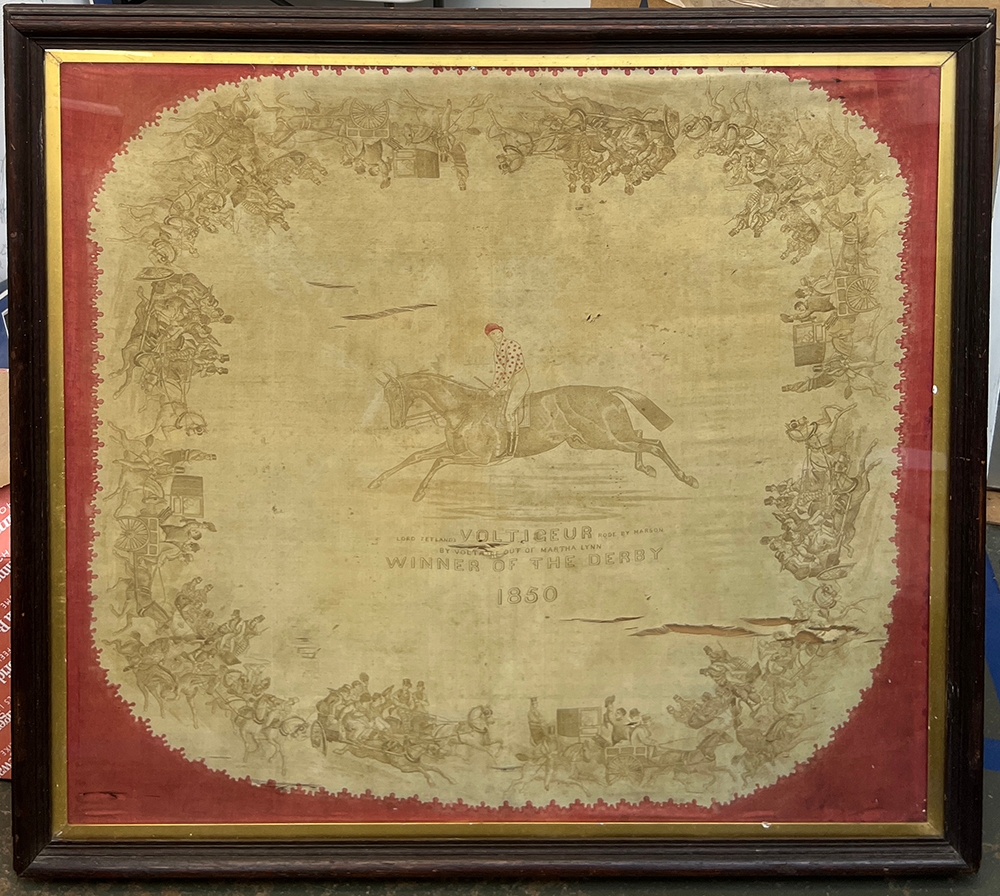
- Voltigeur, 1850: Victorian framed commemorative scarf. Sold by Busby Auctioneers for £45.
- Arctic Prince, 1951: Commemorative silk scarf with artwork attributed to Juliet McLeod. Sold by Burstow & Hewett for £80.
- Nimbus, 1949: Commemorative silk scarf published by Welch, Margetson & Co. Sold by Tennants Auctioneers for £160.
- Parthia, 1959: Illustrated Derby winners scarf. Sold by Graham Budd Auctions for £65.
- Lord Lyon, 1866: Early Victorian commemorative scarf. Sold by Graham Budd Auctions for £160.
- Orby, 1907: Commemorative scarf celebrating the Irish-trained Derby winner. Sold by Adam’s in Dublin in 2013 for £1,300.
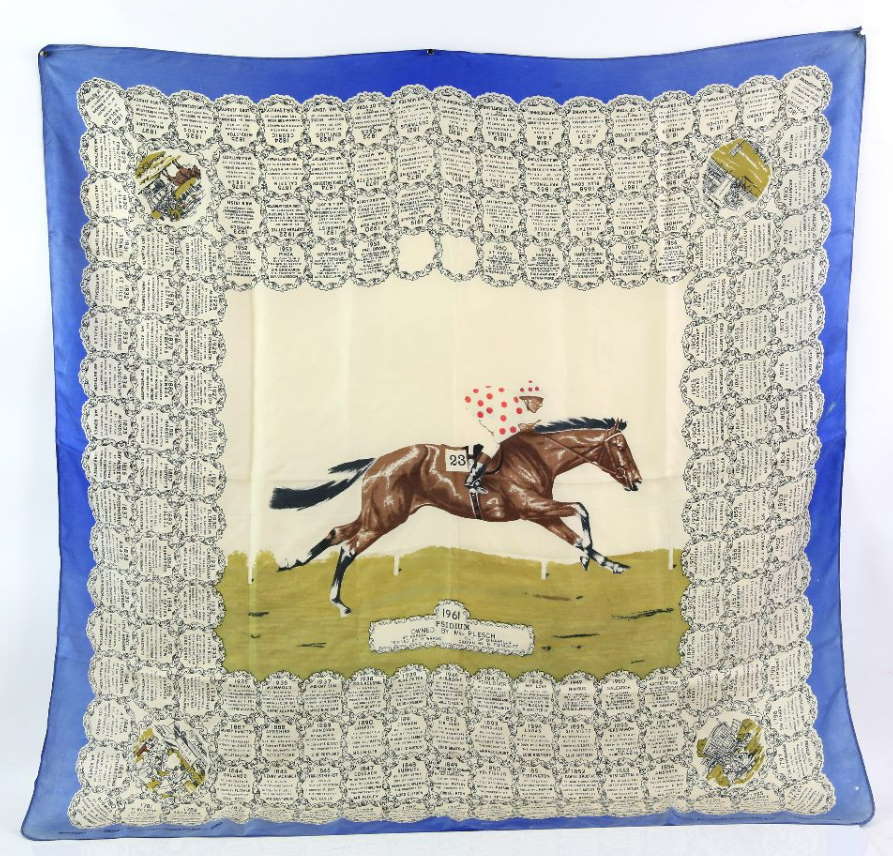
- Psidium, 1961: Illustrated Derby winners scarf. Sold by Ewbank’s in 2020 for £340.
What Makes Derby Silk Scarves Collectable?
The most striking result among these examples is the £1,300 achieved for the Orby scarf at Adam’s in Dublin in 2013. Orby won the 1907 Derby and was trained in Ireland, giving the scarf particular Irish sporting significance. The auction catalogue also records its provenance as the estate of Tony Sweeney.
These associations may have contributed to the strong result, although the precise reasons for the bidding cannot be established from the catalogue alone.
The results also show that age is not the only factor determining value. A twentieth-century example can attract stronger bidding than an earlier Victorian scarf, depending on condition, design, historical interest, provenance and competition between bidders.
Condition and Identification
Condition is especially important with antique and vintage silk. Look for fading, staining, holes, splits, weakened fibres and damage along folds or borders. Silk can deteriorate with prolonged exposure to light, and older examples may become particularly fragile.
Original colours, clear printing and legible inscriptions are desirable. The identity of the winning horse, the artist or publisher, and any documented provenance can also influence interest.
Some scarves have been framed for display. While framing can be attractive, collectors should examine whether the textile has been glued or otherwise permanently attached to a backing. Conservation-quality mounting is preferable, particularly for valuable early examples. Also look out for holes and which can affect values.
A Collecting Field Worth Exploring
Derby commemorative scarves remain a relatively specialised branch of horse racing memorabilia. Their appeal extends beyond racing enthusiasts to collectors of silk textiles, fashion accessories, equestrian art and Victorian sporting history.
For those building a collection, the opportunity to assemble scarves celebrating different Derby winners provides a particularly appealing challenge. Together, they offer a colourful record of more than a century of British racing history.
The variety of auction prices also suggests that interesting examples can still be found at accessible levels, while exceptional pieces with strong provenance or historical associations can command considerably more.
Related Collectibles on eBay
 Investec Derby Festival Silk Scarf
£26.70
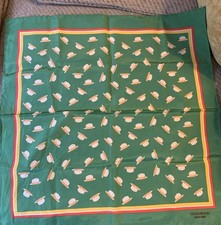 Vintage Pure Silk Goodwood Green Neckachief Scarf
£21.50
 Vintage (1963) silk scarf - Epsom Derby winners 1780-1963 - Welch Margaretson
£78.70
 Hermes Derby 2000 Scarf 90
£414.70
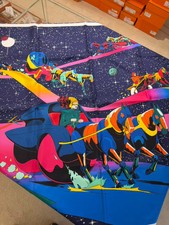 Hermès Space Derby Silk Scarf 90 - Marine / Rose Vif / Multicolor
£368.80
 Vintage Silk Scarf Winners Of The Derby 1966 Welch Margerson & Co. 86cm Square
£83.90
 Equestrian Silk Scarf Klaus Philipp 125 years German Derby Winners
£125.50
 Vintage Derby 100% Silk Double Layer Scarf Floral Print 17x125cm
£22.79
eBay listings may contain affiliate links. We may earn a commission from qualifying purchases.