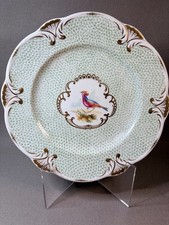
Rockingham pottery and porcelain, produced at Swinton in South Yorkshire between approximately 1826 and 1842, remains one of the most distinctive chapters in English ceramic history. Although often associated broadly with Rococo extravagance, the true Rockingham output was in fact limited to just sixteen years of porcelain manufacture under the management of Brameld & Co., working on the estate of the Earl Fitzwilliam, Marquess of Rockingham.
The works had long produced earthenware, but around 1825 the Brameld family expanded operations, with financial backing from the Marquess, to include bone china production. The porcelain factory quickly developed a highly individual style. While some wares were restrained and elegant, Rockingham became synonymous with elaborate and sometimes eccentric forms. The Rococo Revival aesthetic of the 1830s suited the factory perfectly, and its designers mastered lavish moulded decoration, scrolling handles, rustic textures, and exuberant applied ornament.
Among the most famous creations are the monumental “Rhinoceros” vases of circa 1826, complete with rhinoceros-shaped finials—one of which is now housed in the Victoria and Albert Museum in London. Tea services were modelled in plant-like forms with overlapping leaves, and handles frequently resembled twisted branches. Dessert services commissioned for royalty, including an ambitious service for King William IV begun around 1830, demonstrated the factory’s technical skill and artistic ambition. Although intended for William IV’s coronation, the service was completed in time for Queen Victoria’s coronation in 1838.
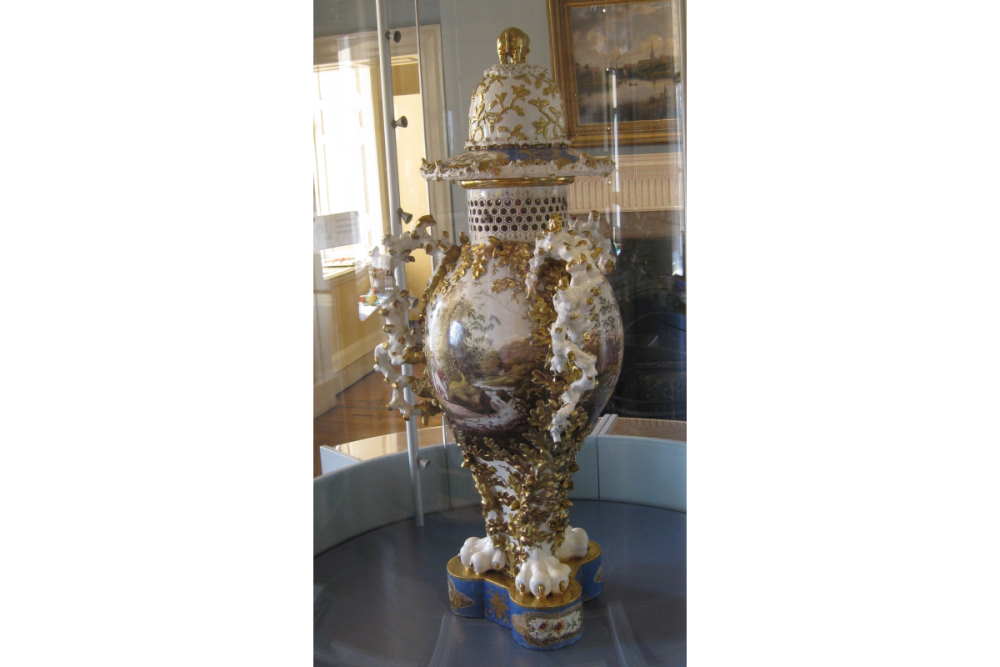
Rockingham porcelain was of the bone china type, often described as slightly open or floury in texture, with a glaze sometimes prone to fine crazing. Decoration ranged from modest sprig patterns and simple gilt borders to richly painted landscapes and fruit subjects. Talented artists such as Thomas Steel, renowned for fruit painting, and George Speight, known for figure decoration, contributed to plaques, vases, and elaborate dessert wares. Raised floral encrustation in the Coalbrookdale style was also popular, aligning Rockingham with contemporary European fashions, including Meissen.
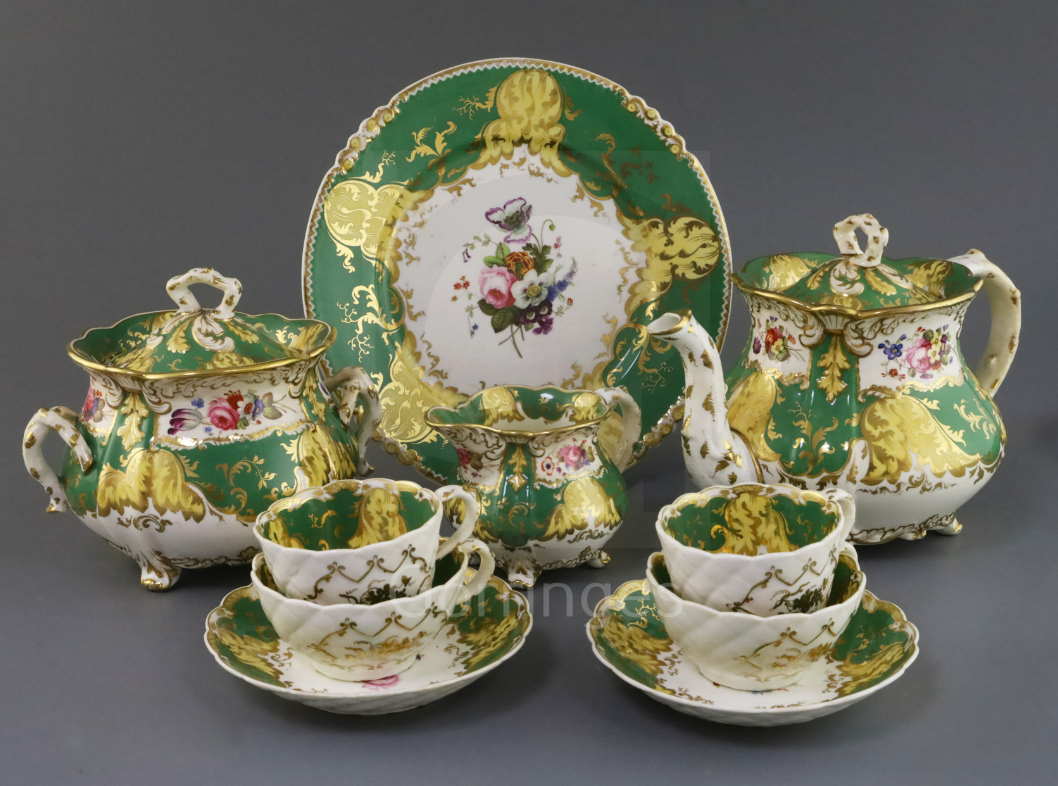
One of Rockingham’s distinguishing characteristics is its marking system. Many genuine pieces bear a printed griffin mark derived from the Fitzwilliam crest. Pre-1831 examples are usually printed in red, while marks from 1831 to 1842 appear in puce. Some later wares carry the phrase “Manufacturers to the Queen.” Additionally, painted or gilt “cl” marks followed by numbers indicate class numbers used for costing and invoicing. Pattern numbers are particularly important for authentication: dessert services typically fall between 409 and 836, while teawares range roughly from 400 to 1,600, with some late fractional numbers between 2/1 and 2/150.
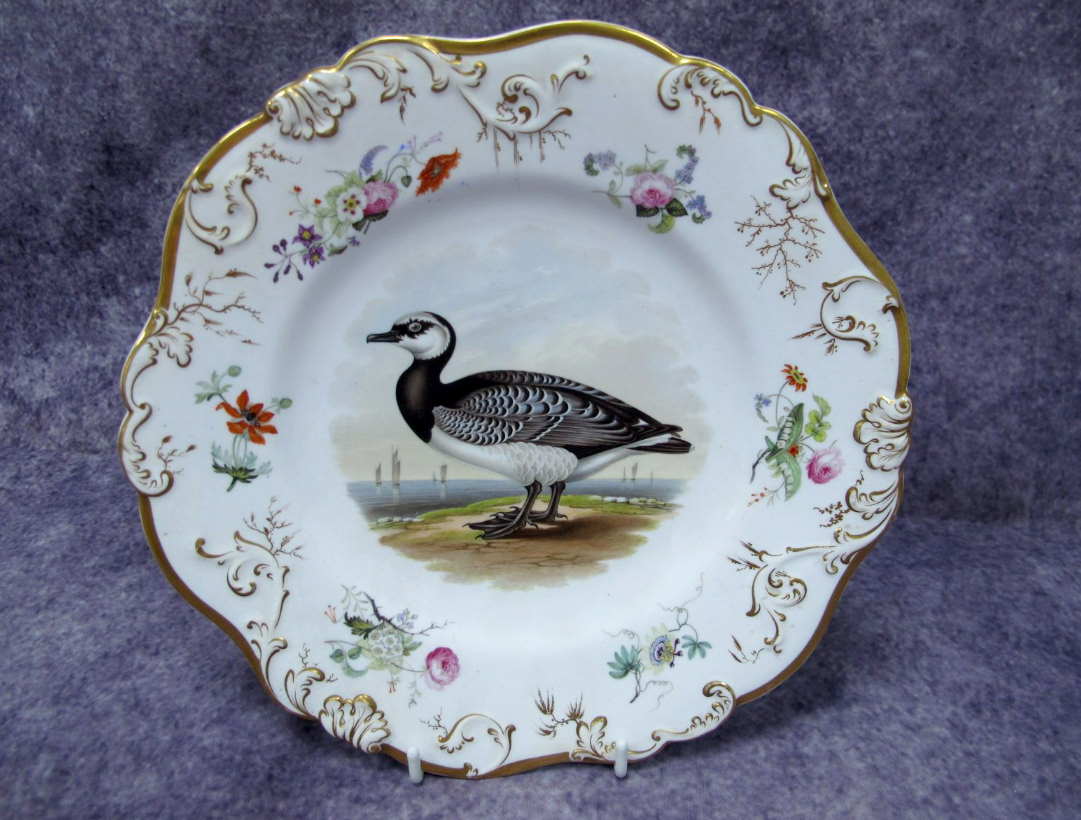
Despite this relatively precise documentation, confusion has long surrounded Rockingham. Many Victorian tea sets from factories such as Coalport, Minton, Ridgway, and Samuel Alcock were incorrectly attributed to Rockingham because they shared Rococo Revival styling. Similarly, Staffordshire porcelain ornaments—including sheep, poodles, and cottage pastille burners—were often mislabelled as Rockingham, largely due to the presence of spurious griffin marks. Genuine Rockingham ornamental porcelain was produced in limited quantities, and if all wares attributed to the factory were authentic, the small Swinton works could never have coped with the volume.
The factory’s ambition may ultimately have contributed to its downfall. Focusing heavily on elaborate ornamental pieces rather than practical everyday wares, the works struggled financially and closed in 1842. Yet in its brief porcelain period, Rockingham created some of the most imaginative and visually dramatic ceramics of the English nineteenth century.
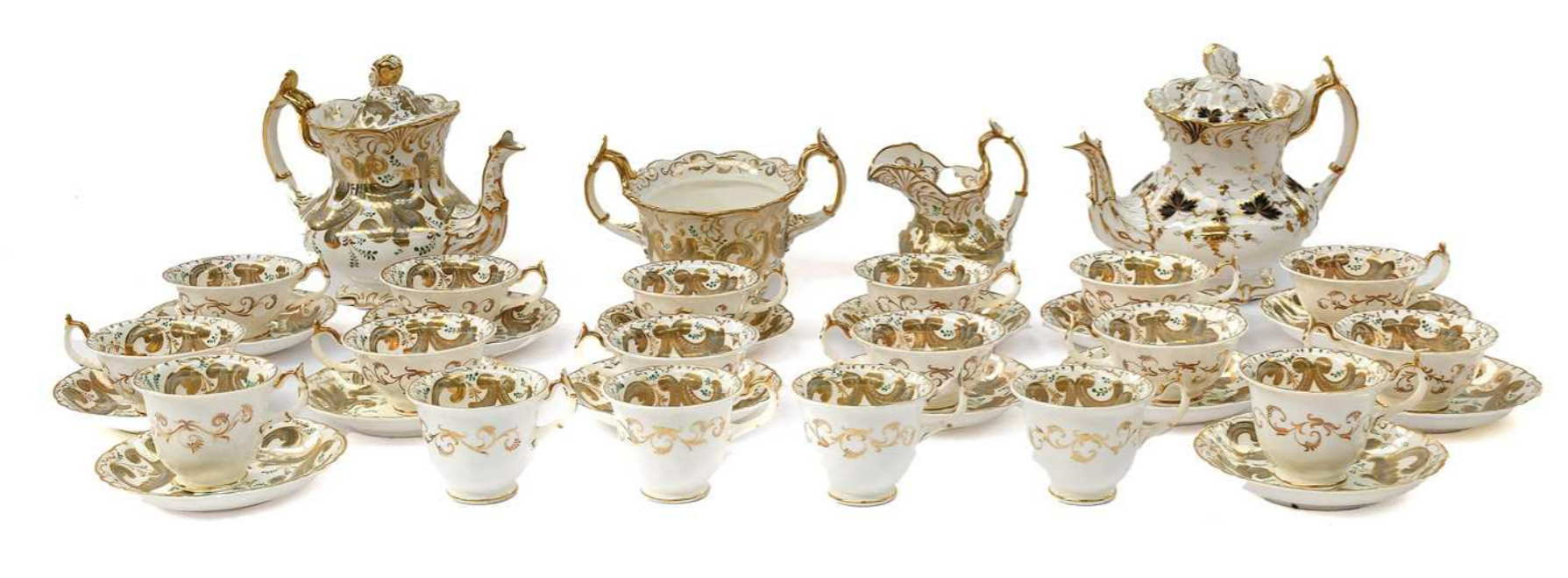
Authentic Rockingham porcelain is keenly collected, prized for its bold modelling, refined painting, and distinctive griffin marks. Careful study of shapes, pattern numbers, and documented examples remains essential in distinguishing the true Yorkshire output from the many imitations that have followed.
Related
Jackfield Ware The Origins, Decoration, and Collecting of Black Glazed Pottery
Related Collectibles on eBay
 Paragon Rockingham Green Teaset 1952 - 1957 Double Warrant 7pc Gilding wear
£52.70
Paragon Rockingham Green Teaset 1952 - 1957 Double Warrant 7pc Gilding wear
£52.70
 Paragon FBC Rockingham Green Bird. Coffee Cup, Saucers, Petit Four Plates
£31.90
Paragon FBC Rockingham Green Bird. Coffee Cup, Saucers, Petit Four Plates
£31.90
 Vintage Large Hand Painted Rockingham Twin Handled Loving Cup
£26.99
Vintage Large Hand Painted Rockingham Twin Handled Loving Cup
£26.99
 Blushware Jug Rockingham Pottery Floral Decoration
£6.99
Blushware Jug Rockingham Pottery Floral Decoration
£6.99
 RARE ANTIQUE - ROCKINGHAM YELLOW WARE JUG - NEAR MINT CONDITION
£94.99
RARE ANTIQUE - ROCKINGHAM YELLOW WARE JUG - NEAR MINT CONDITION
£94.99
 Rockingham pottery 2 jugs one has logo on bottom. One pink One pale orange gc
£22.54
Rockingham pottery 2 jugs one has logo on bottom. One pink One pale orange gc
£22.54
 Vintage Paragon Bone China Rockingham Green Side Plate 17.5cm Floral Cottagecore
£12.00
Vintage Paragon Bone China Rockingham Green Side Plate 17.5cm Floral Cottagecore
£12.00
 Rockingham 3 tier china cake stand made from Paragon china green variant
£20.42
Rockingham 3 tier china cake stand made from Paragon china green variant
£20.42
eBay listings may contain affiliate links. We may earn a commission from qualifying purchases.