The Hagenauer Workshop, founded in Vienna in 1898 by Carl Hagenauer (1872-1928), marked a pivotal shift in the world of sculpture and decorative arts. Moving away from the intricate and naturalistic details prevalent in 19th-century art, Carl Hagenauer introduced a radical, simplified, and often streamlined aesthetic that would come to characterize the Workshop’s output.
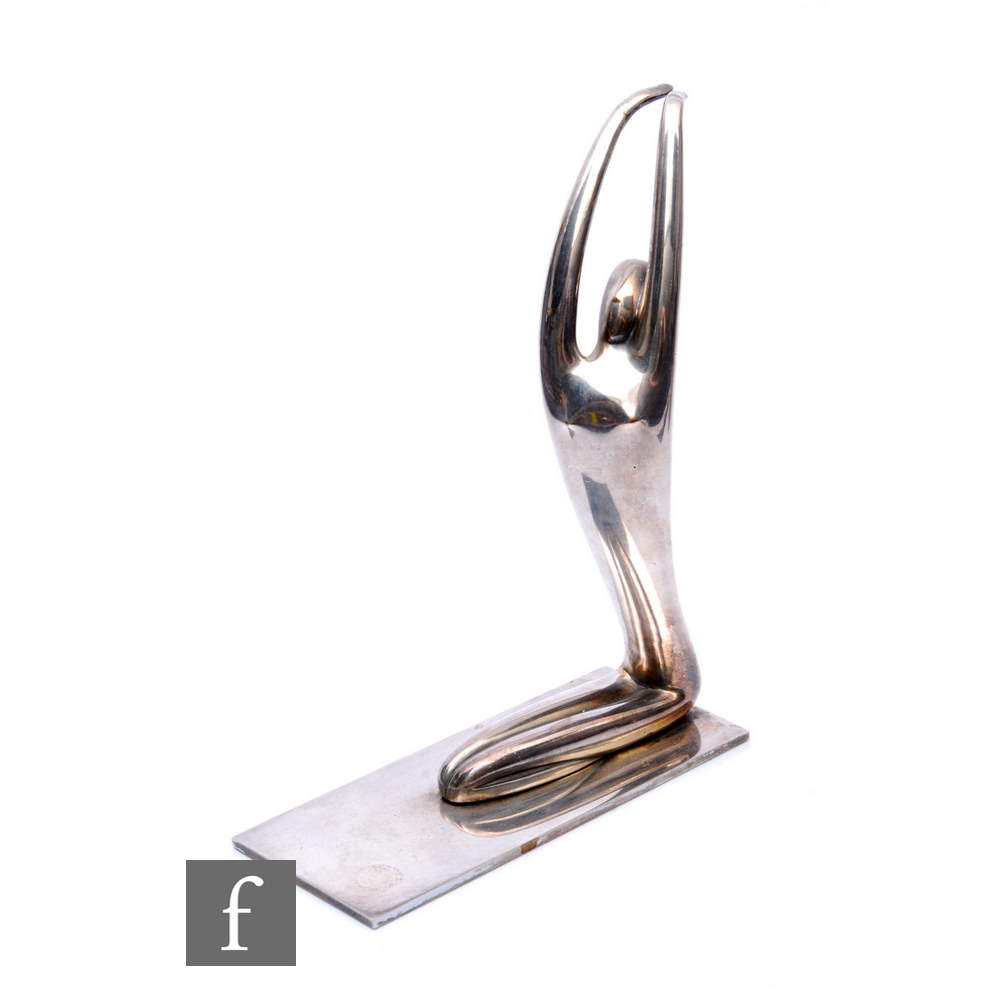
Initially, the Workshop specialized in both practical and ornamental artifacts, including tablewares, lamps, mirrors, and vases, crafted primarily from metal. However, it was their metal figurines and group sculptures produced between 1910 and 1930 that garnered widespread acclaim across Europe, establishing the Hagenauer name as synonymous with avant-garde design.
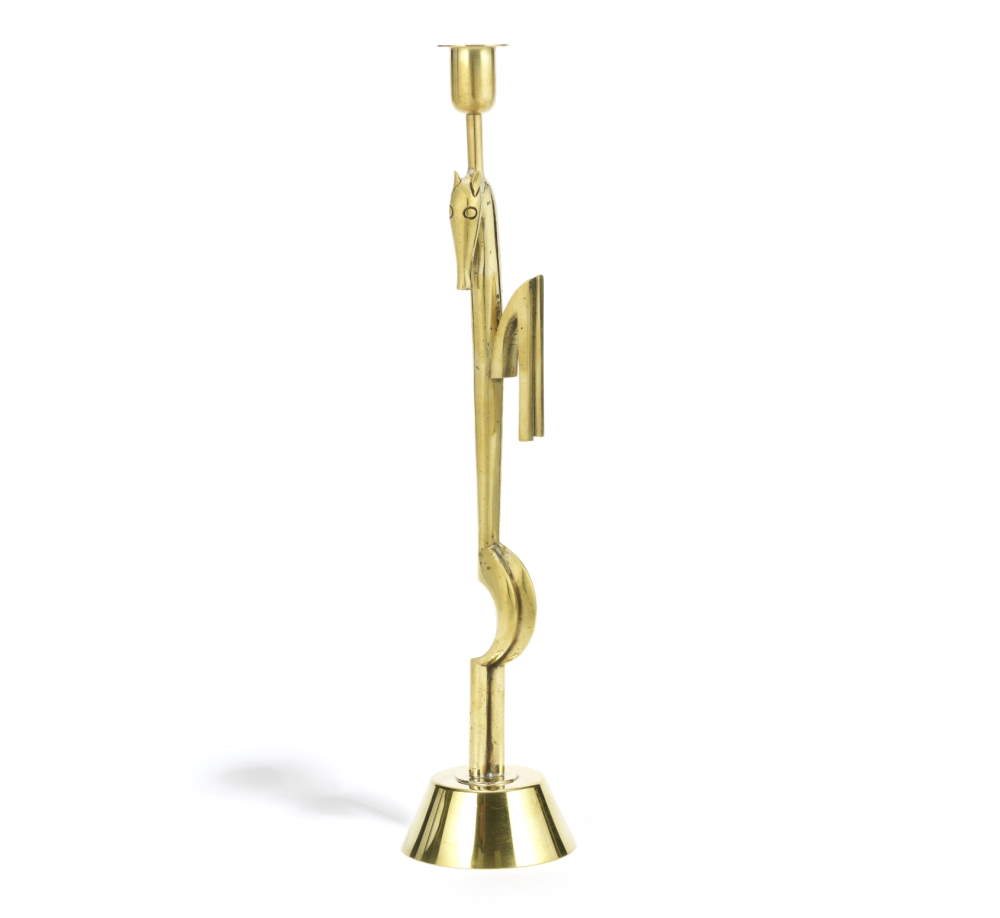
Upon Carl Hagenauer’s passing in 1928, his eldest son, Karl, alongside his brother Franz, took the helm of the Workshop. The 1930s saw their designs evolve to embody the essence of New Realism, with each piece characterized by movement and dynamism, distilled into simple, unbroken forms devoid of unnecessary detail. This approach is exemplified by their sculptures of dancers, gymnasts, horses, and panthers, where the fluidity and grace of motion are captured with minimalist elegance. One notable design features a kneeling woman, her face rendered in a mask-like simplicity reminiscent of Brancusi’s “Sleeping Muse,” highlighting the influence of contemporaneous artists like Brancusi and Modigliani on the Hagenauer aesthetic.

Collecting pieces from the Hagenauer Workshop presents a unique challenge, given the difficulty in distinguishing between the contributions of Carl, Karl, and Franz. While Carl and Karl were largely responsible for the Workshop’s utilitarian creations, Franz Hagenauer is credited with the more decorative sculptures that have become highly coveted by collectors. Hagenauer masks, along with figures that bear the stylistic influences of Modigliani or Brancusi, are especially sought after for their decorative appeal and stylish finesse.
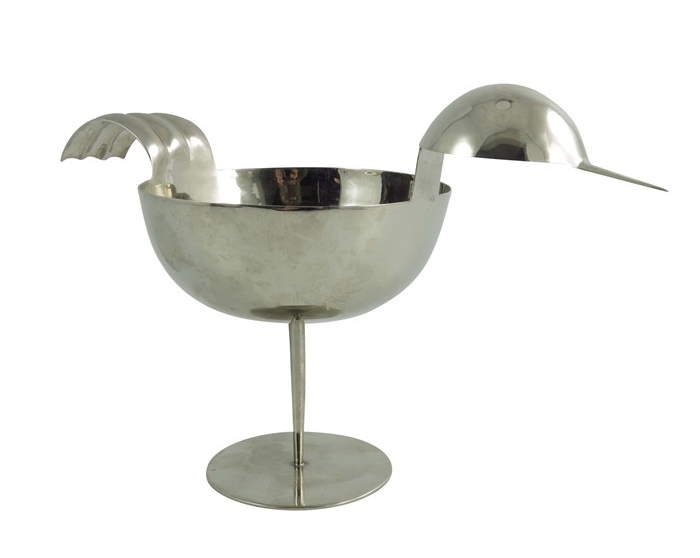
The distinctive mark of Hagenauer pieces, usually stamped on the base with the “wHw” monogram, sometimes includes the designer’s name, date, and place of origin. In the absence of a base, these marks are found in another discreet location on the piece, aiding in the authentication and appreciation of these collectibles.
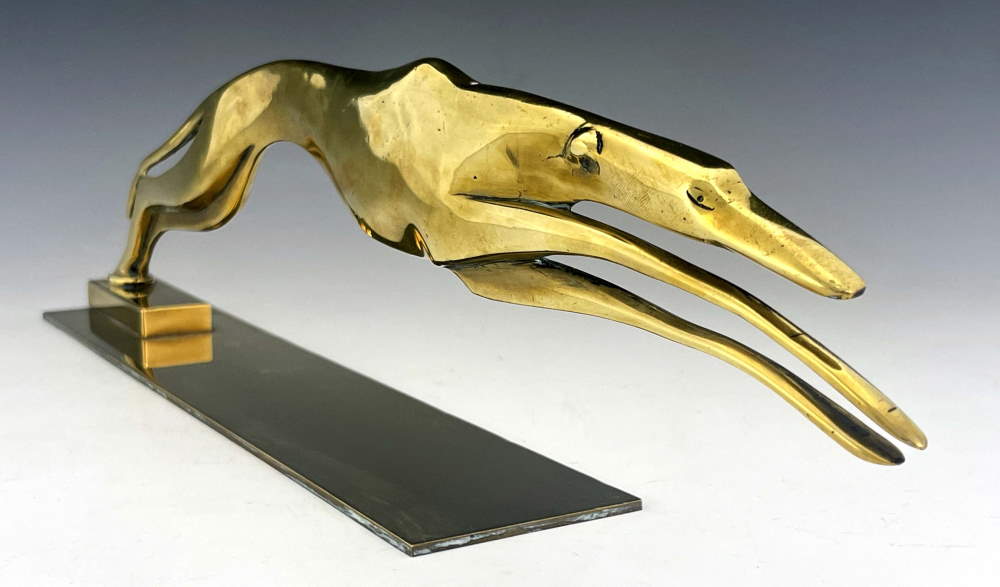
Today, the legacy of the Hagenauer Workshop continues to be celebrated for its significant contribution to the evolution of modern design, embodying a seamless blend of functionality and aesthetic innovation. The Workshop’s dedication to a simplified, yet expressive form has left an indelible mark on the history of decorative arts, making Hagenauer pieces a prized addition to any collection.
Related
Demetre Chiparus A Master of Art Deco Sculptures