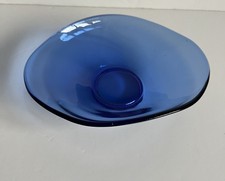
Per Lutken was a renowned Danish draughtsman and glass craftsman who became a legendary name in the world of glass design. Born in 1916 in Denmark, Lutken had an eye for detail and was passionate about all forms of fine craftsmanship. One of the most iconic glass designer he is synonymous with Danish glass. For over five decades, Lutken was admired for his work which included glasses, vases and sculptures. We take a look at his life, his design and some realised auction prices.
His style remained distinctly modern with simplicity and a timeless elegance to it, complimented by sophisticated fusions between industrial production and craftsmanship. Each piece contains clean lines, contours and shapes which didn’t fade even in the years since his passing in 1998. Even today, his works are used as reference points for aspiring artists looking to create glasswork with sophistication and artistic merit.
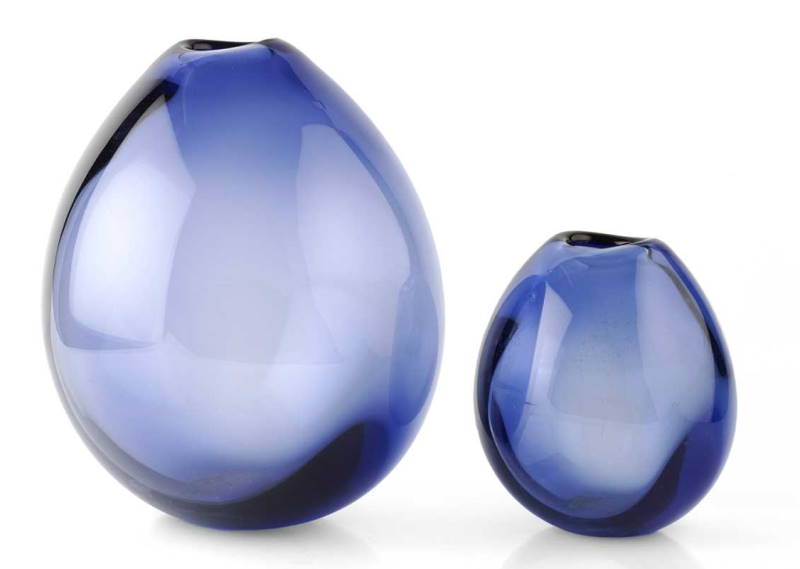
After attending the School of Danish Arts and Crafts in Copenhagen in 1938, he developed his natural talent for drawing and went on to apply it to glassworking when he joined Holmegaard (at their factory on the island of Zealand) at the age of 25 in 1941. In 1942, Per Lütken took over from Jacob E. Bang as creative director and led the design team at Holmegaard Glasværk for 56 years until his death in 1998.
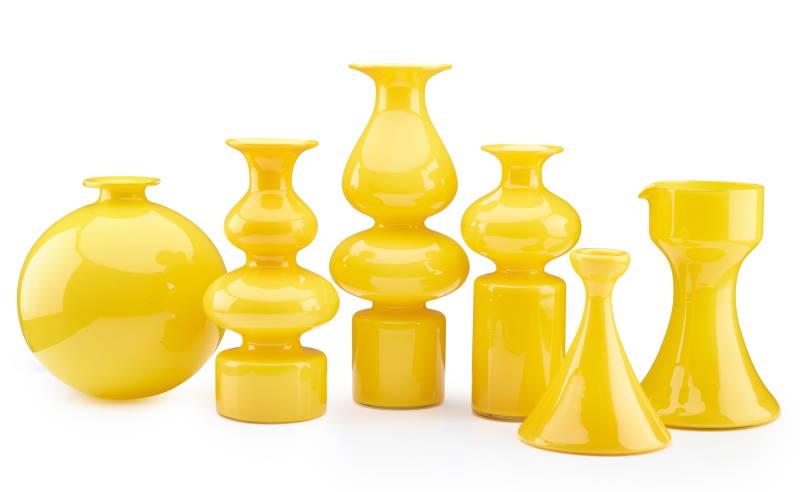
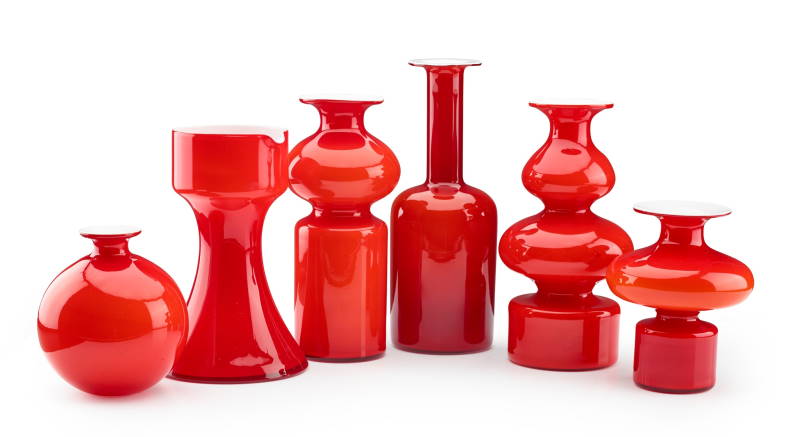
Throughout his career, he created over 80 glass series and some 3,000 glass designs and became one of Denmark’s most prolific glass designers. He believed that drinking glasses should be crafted with plenty of weight, while also embodying the finesse of a true glass craftsman. One of his most famous and still popular designs is Carnaby which was created in 1968. He designed 15 vases for the series which came with a geometric shape, and pop-era colors. Per Lütken was also a firm believer in the use of colours, often creating vibrant works with an array of hues.
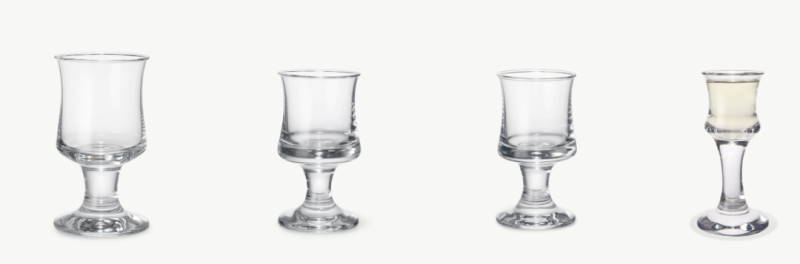
In 1970 his creation, the No. 5 glass series, is an example of his perfect balance between practicality and elegance. He continued to create popular, functional designs and in 1971 the popular Skibsglas glasses also had a similar success story -and quickly became one of the biggest sellers in Denmark. The Skibglas handmade glass with the curved shape is robust and popular for everyday use.
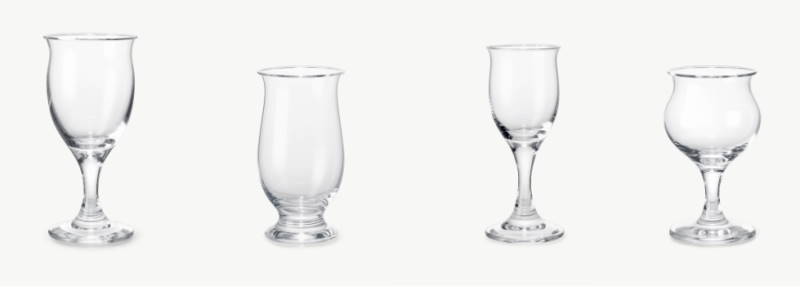
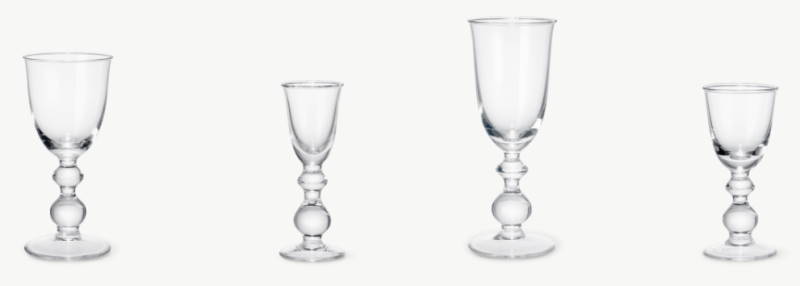
His Idéelle series, released in 1978, is highly sought after for its intricate detailing and bold colors. Charlotte Amalie, his 1981 collection, showcases the same sharp lines and attention to detail that makes Lütken’s designs so desirable. The Provence Bowl in 1955 and Selandia dish in 1957 are both distinct pieces that demonstrate his mastery of capturing atmosphere in design.
His dedication to perfecting his craft did not go unnoticed, either. In 1985 he was awarded with The Thorvald Bindesbøll Medal for outstanding achievement in industrial design, and was praised for pushing the boundaries of glass artistry and creating unique pieces that could be enjoyed by a wide public. Ultimately, he believed that glass provides people with a sense of grace and charm – which is clearly evident in his stunning creations spanning nearly six decades.
To this day, many consider Per Lutken’s work to be among the finest examples of mid-century modern Danish design and collections of his work appear in museums around the world including the Museum of Modern Art in New York.. His innovative approach to creating beautiful yet functional works of art has inspired generations of glass designers who continue to build upon his legacy. From modest beginnings in Copenhagen in 1924, he rose through the ranks at Holmegaard Glassworks to become one of Denmark’s most celebrated glass designers ever—a title that remains firmly intact even after all these years later.
Related
Per Lutken designs at Rosendahl
Why the Simple and Functional Designs of Arne Bang Pottery Continue to Endure?
Related Collectibles on eBay
 Holmegaard Per Lutken Aqua Art Glass 'Selandia' Bowl
£16.15
Holmegaard Per Lutken Aqua Art Glass 'Selandia' Bowl
£16.15
 Holmegaard Small "Fionia" Glass Bowl by Per Lutken 1961
£31.90
Holmegaard Small "Fionia" Glass Bowl by Per Lutken 1961
£31.90
 Holmegaard Bowl Per Lutken Signed Smoked Glass Freeform Ovoid MCM 50s 60s
£49.99
Holmegaard Bowl Per Lutken Signed Smoked Glass Freeform Ovoid MCM 50s 60s
£49.99
 Holmegaard #15389 Per Lutken Smoky Glass 'Hellas' Vase - Signed 10" VGC
£18.00
Holmegaard #15389 Per Lutken Smoky Glass 'Hellas' Vase - Signed 10" VGC
£18.00
 Holmegaard Rondo Glass Vase By Per Lutken Denmark, 1956. Signed MCM Rare
£29.99
Holmegaard Rondo Glass Vase By Per Lutken Denmark, 1956. Signed MCM Rare
£29.99
 Vintage Signed Per Lutken Holmegaard Vase 220236
£198.09
Vintage Signed Per Lutken Holmegaard Vase 220236
£198.09
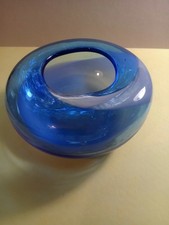 Per Lutken For Holmegaard special edition 'Provence bowl'
£26.42
Per Lutken For Holmegaard special edition 'Provence bowl'
£26.42
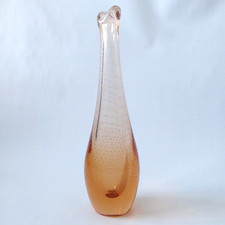 12" Kastrup Holmegaard Denmark vintage art glass bubble vase, Per Lutken, beak
£24.62
12" Kastrup Holmegaard Denmark vintage art glass bubble vase, Per Lutken, beak
£24.62
eBay listings may contain affiliate links. We may earn a commission from qualifying purchases.